Dynamics of aptamers

Leveraging NMR data to characterize the conformational landscape of aptamers

Eric Largy

ARNA, INSERM U1212, CNRS UMR 5320, Université de Bordeaux

UFR des Sciences Pharmaceutiques, Université de Bordeaux

May 17, 2026

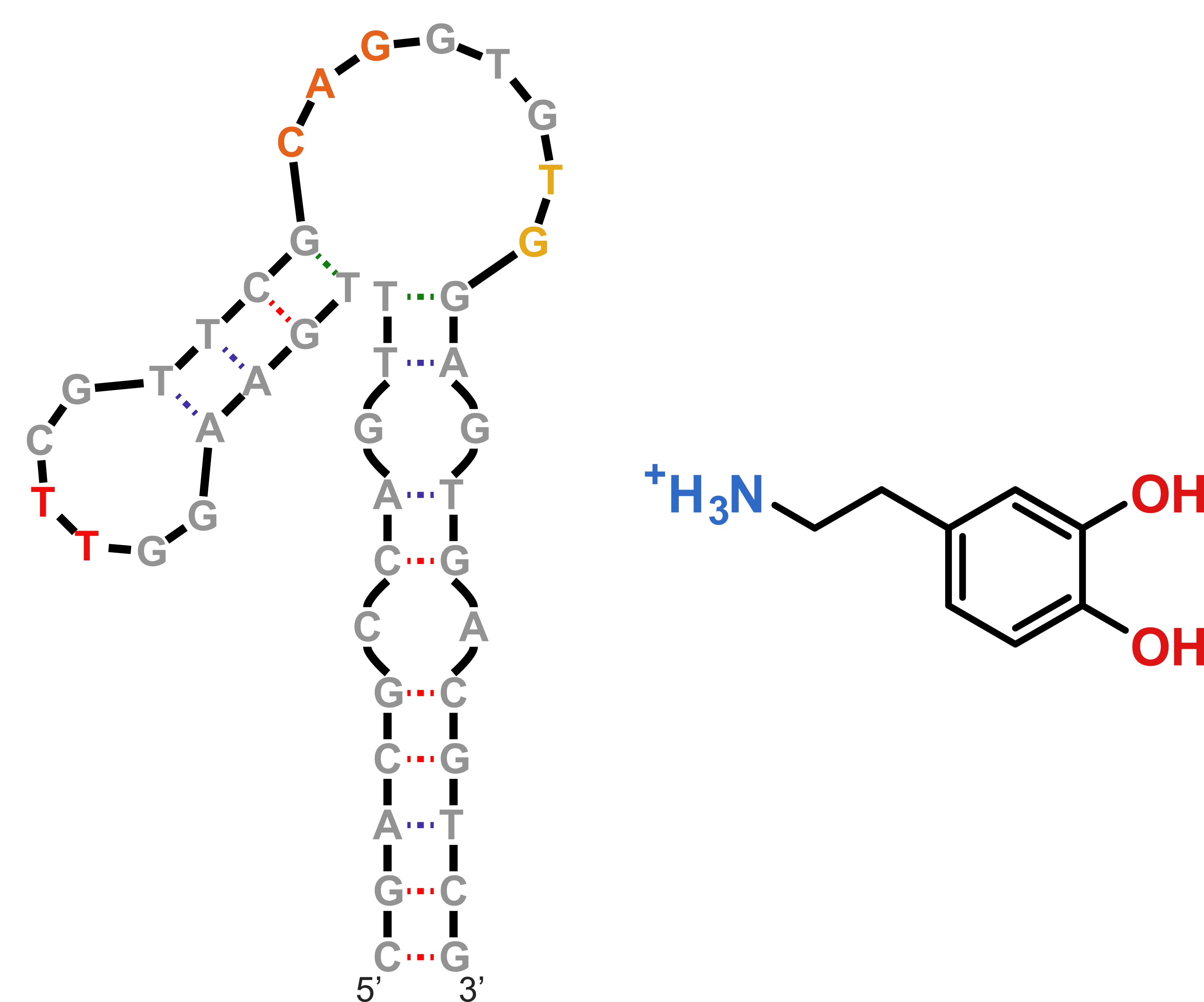
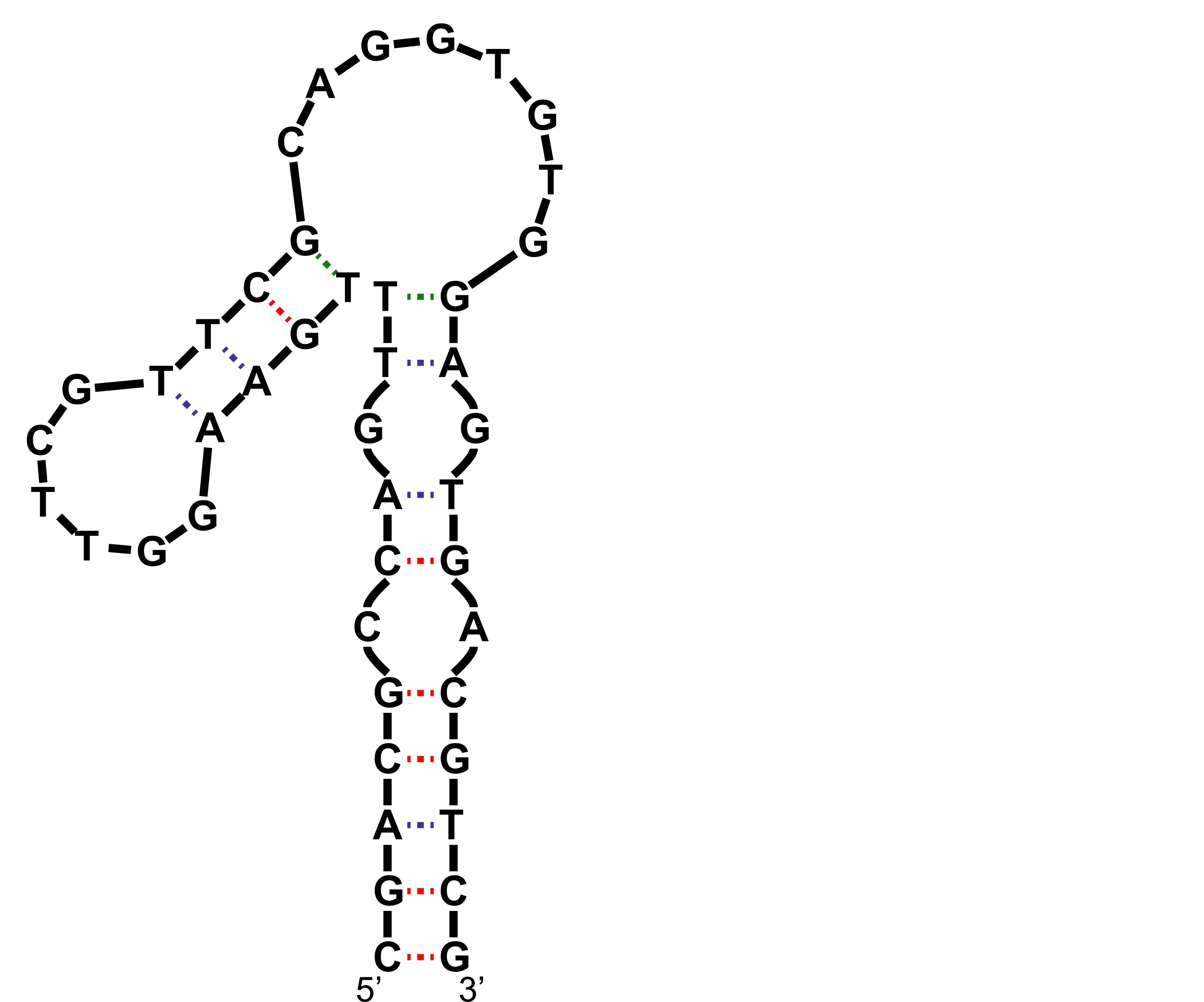
On the limits of mFold

Binding loops stemming from wishful thinking
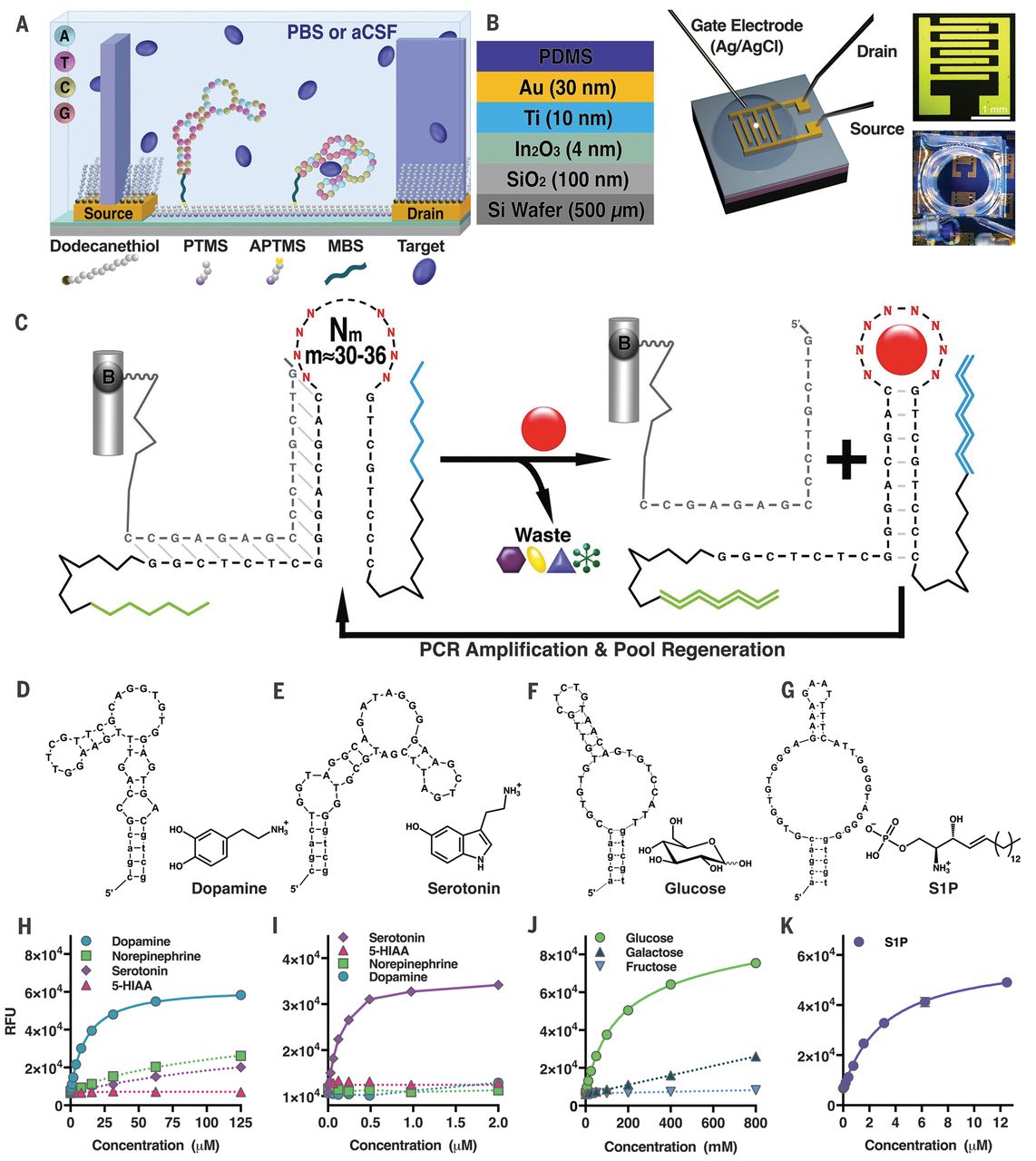
Binding loops stemming from wishful thinking

mFold produces this structure in 1 M NaCl solutions, at 37 °C
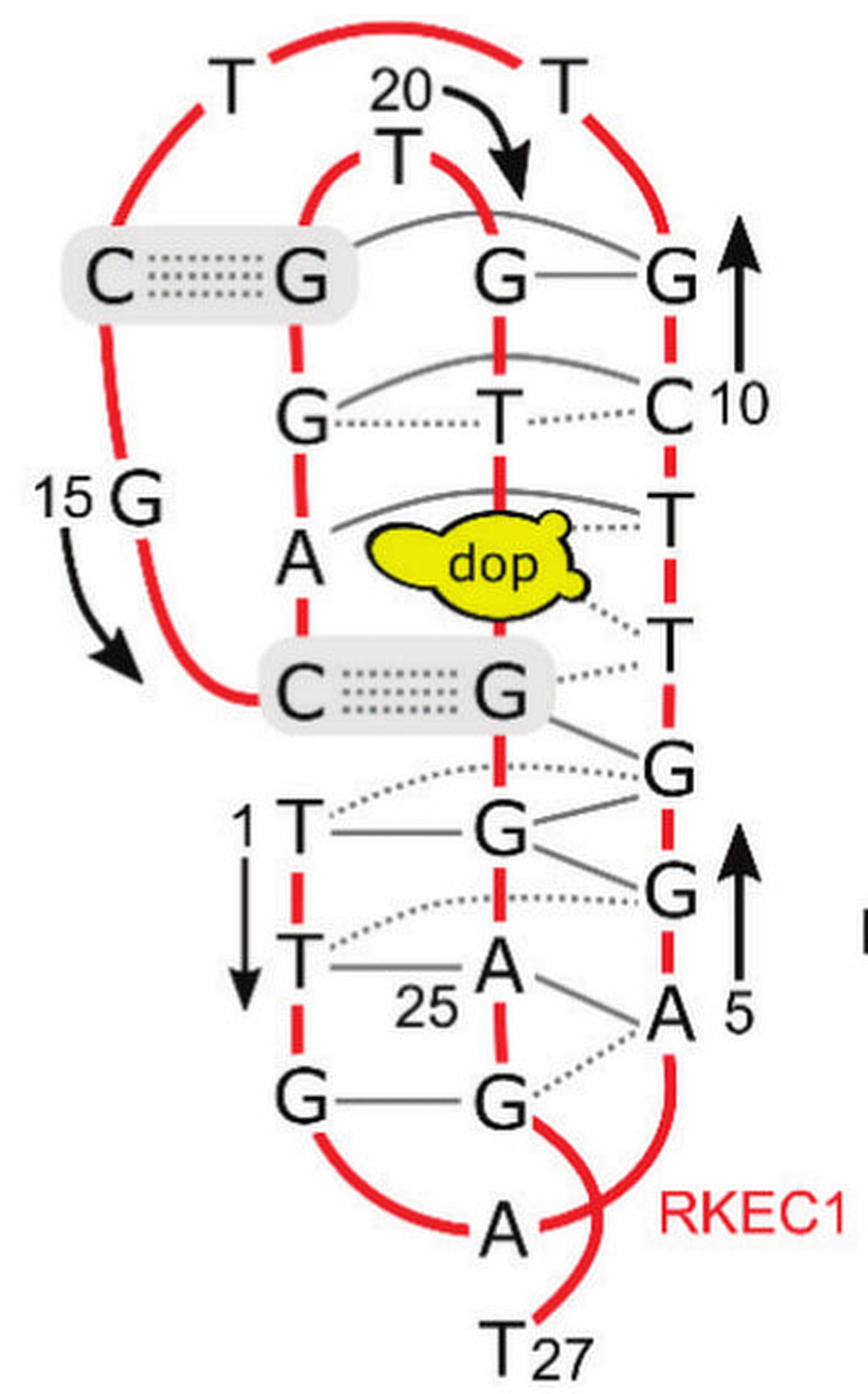
NMR to the rescue

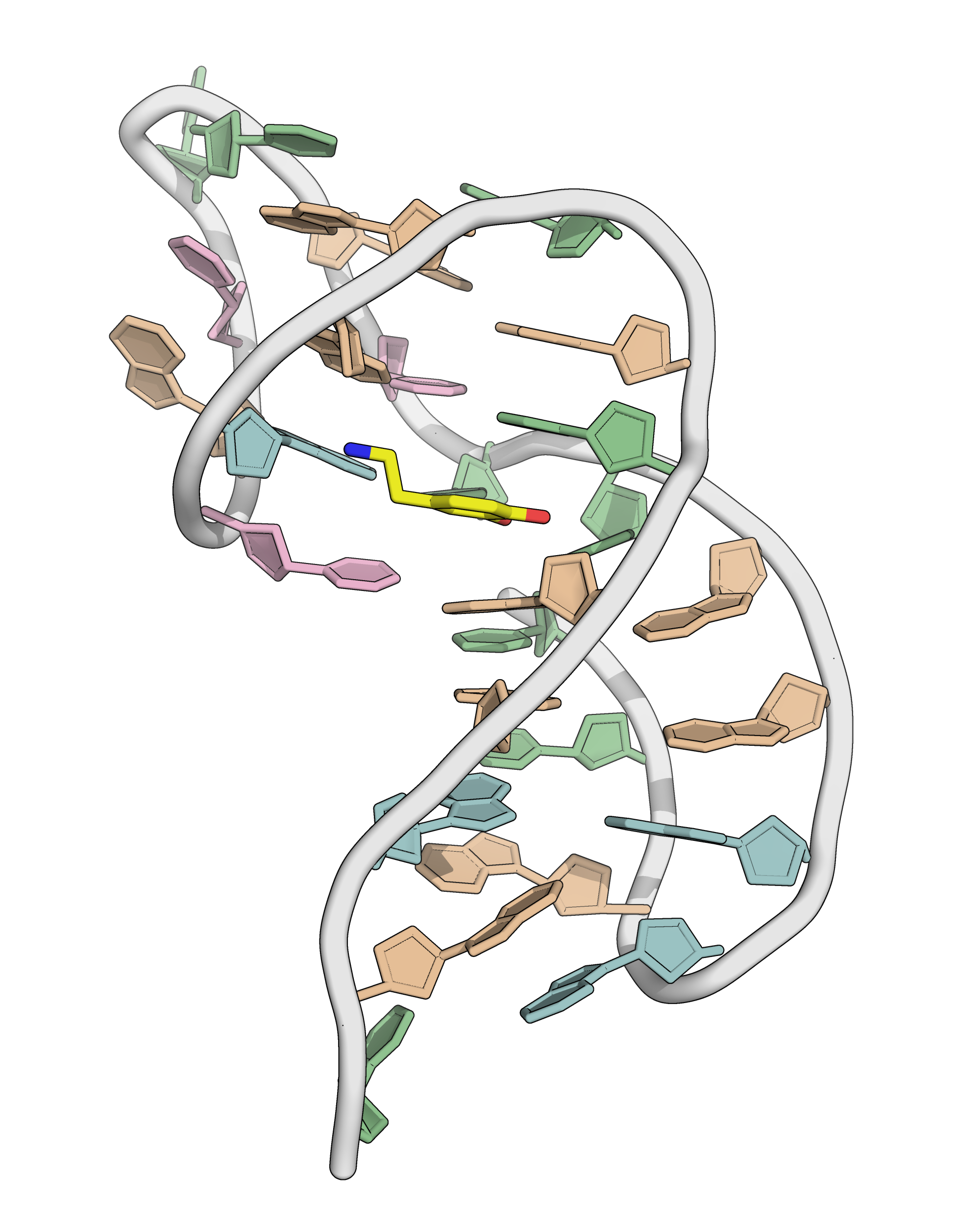
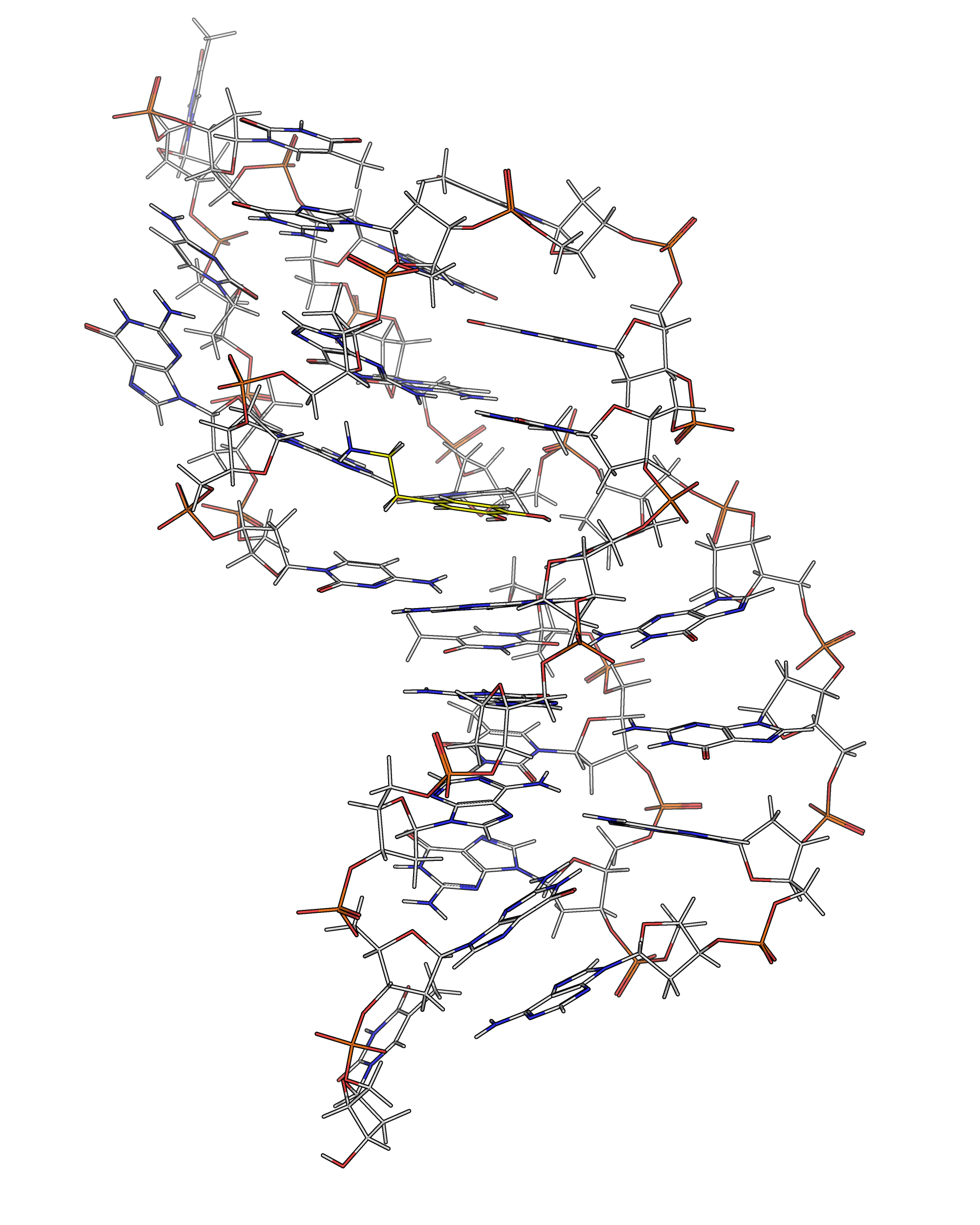
NMR provides a (non-canonical !) starting model
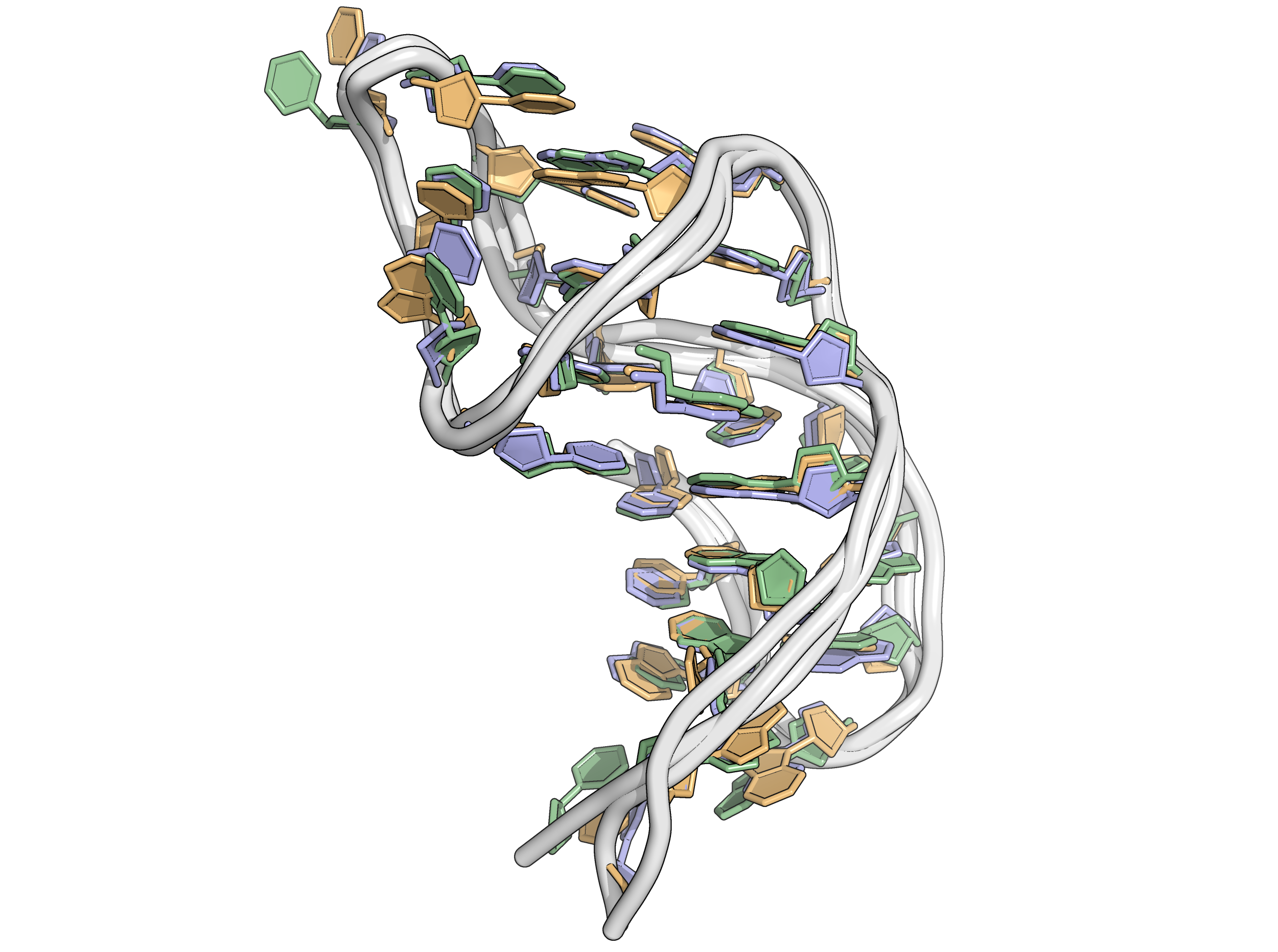
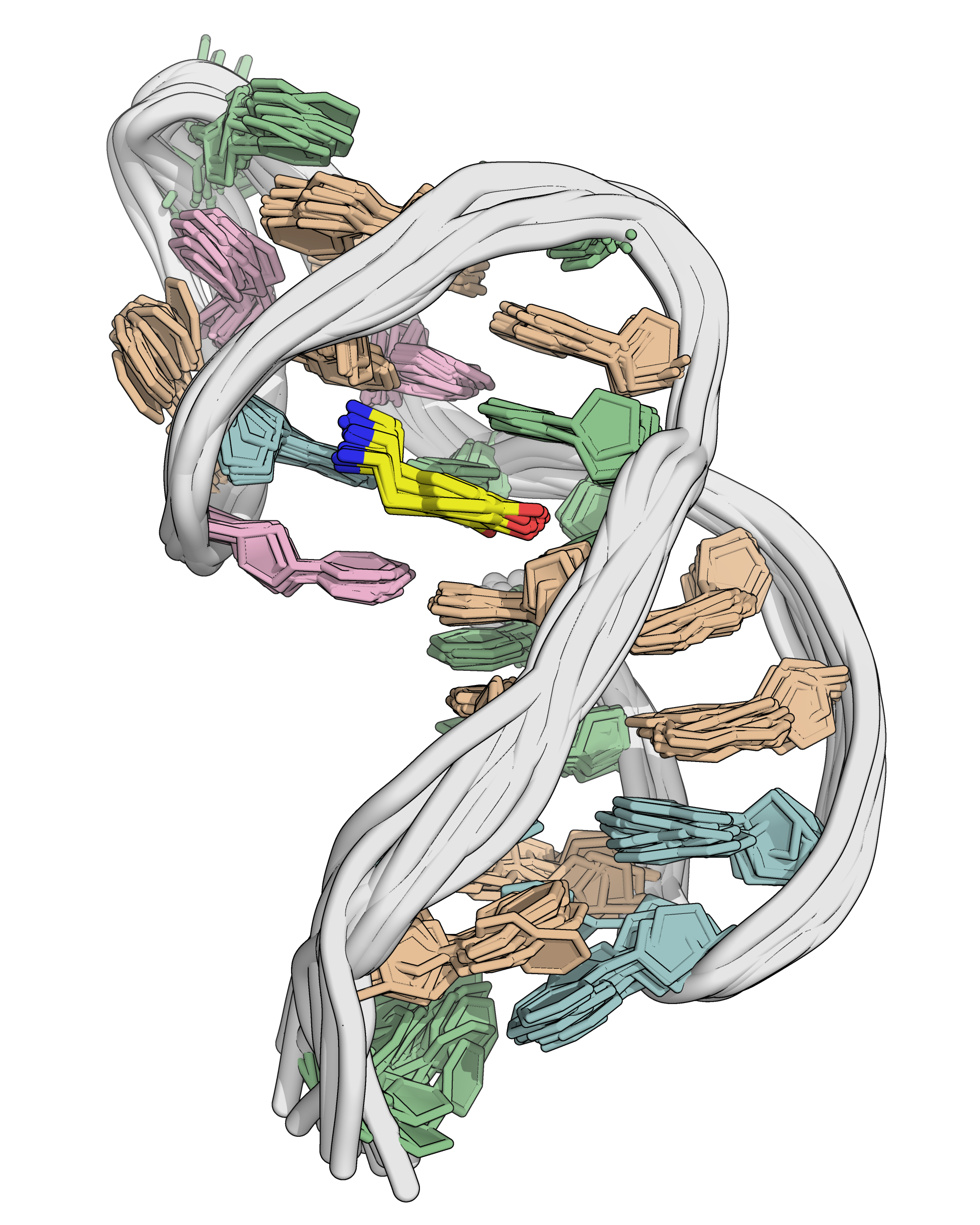
NMR provides an ensemble of models
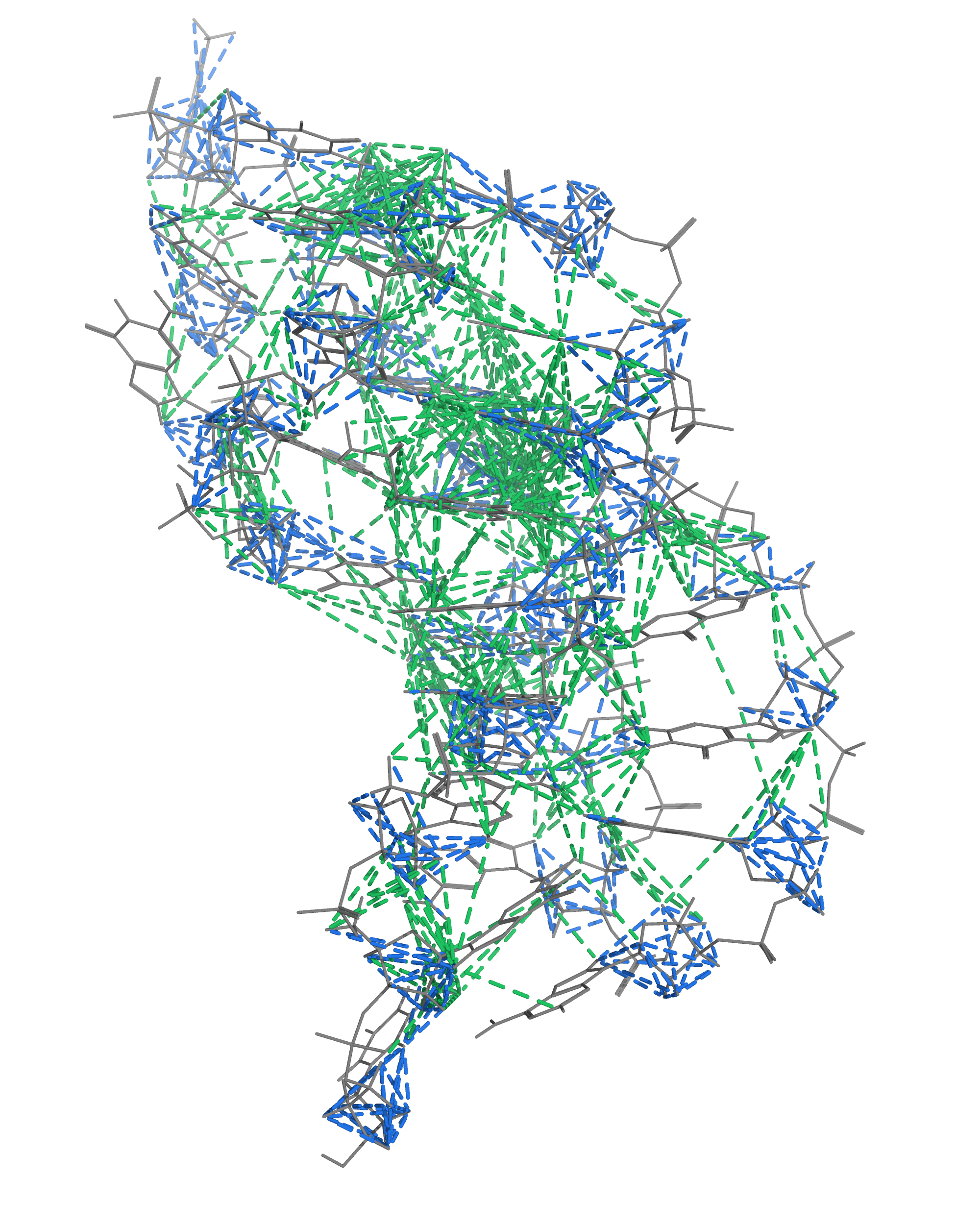
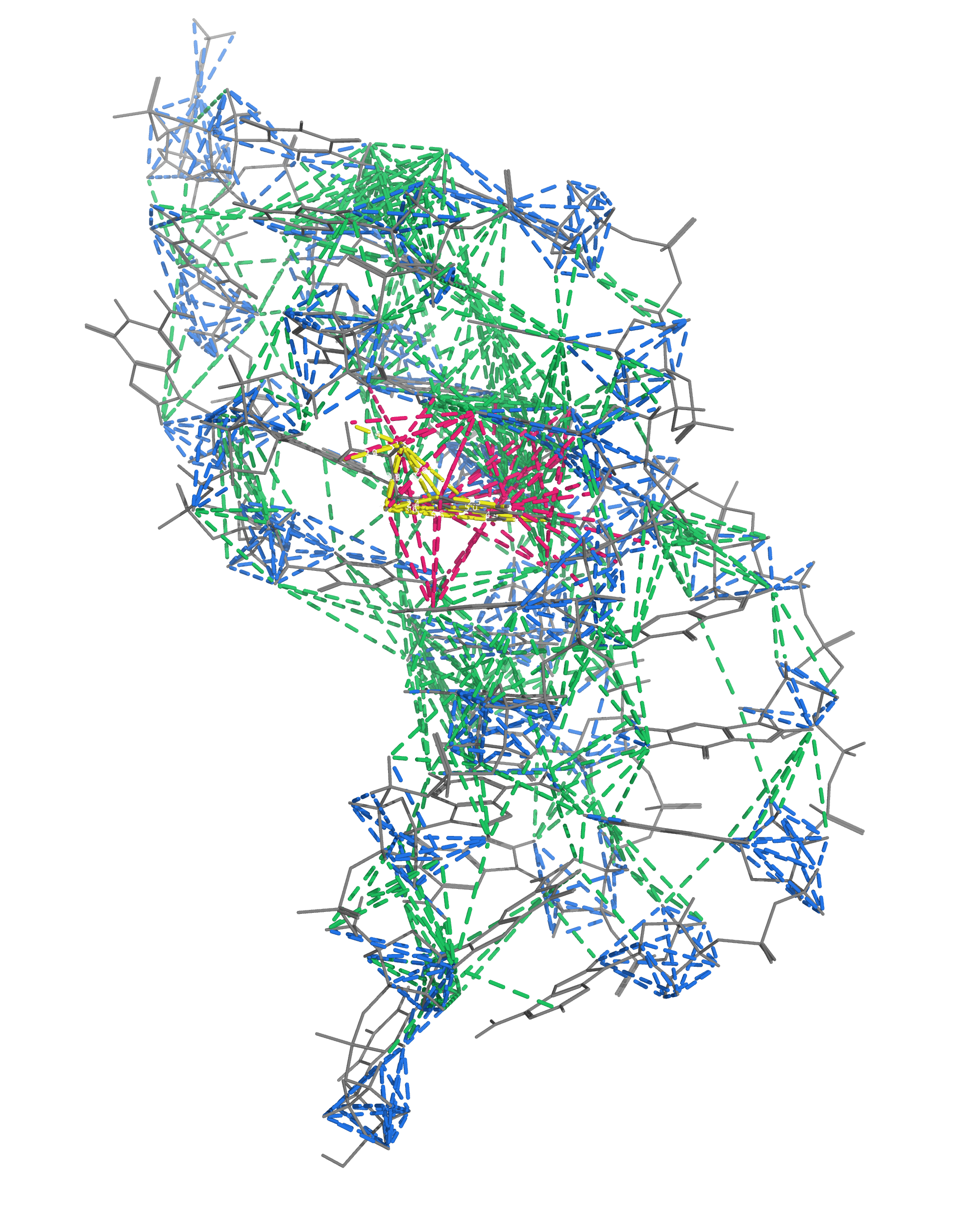
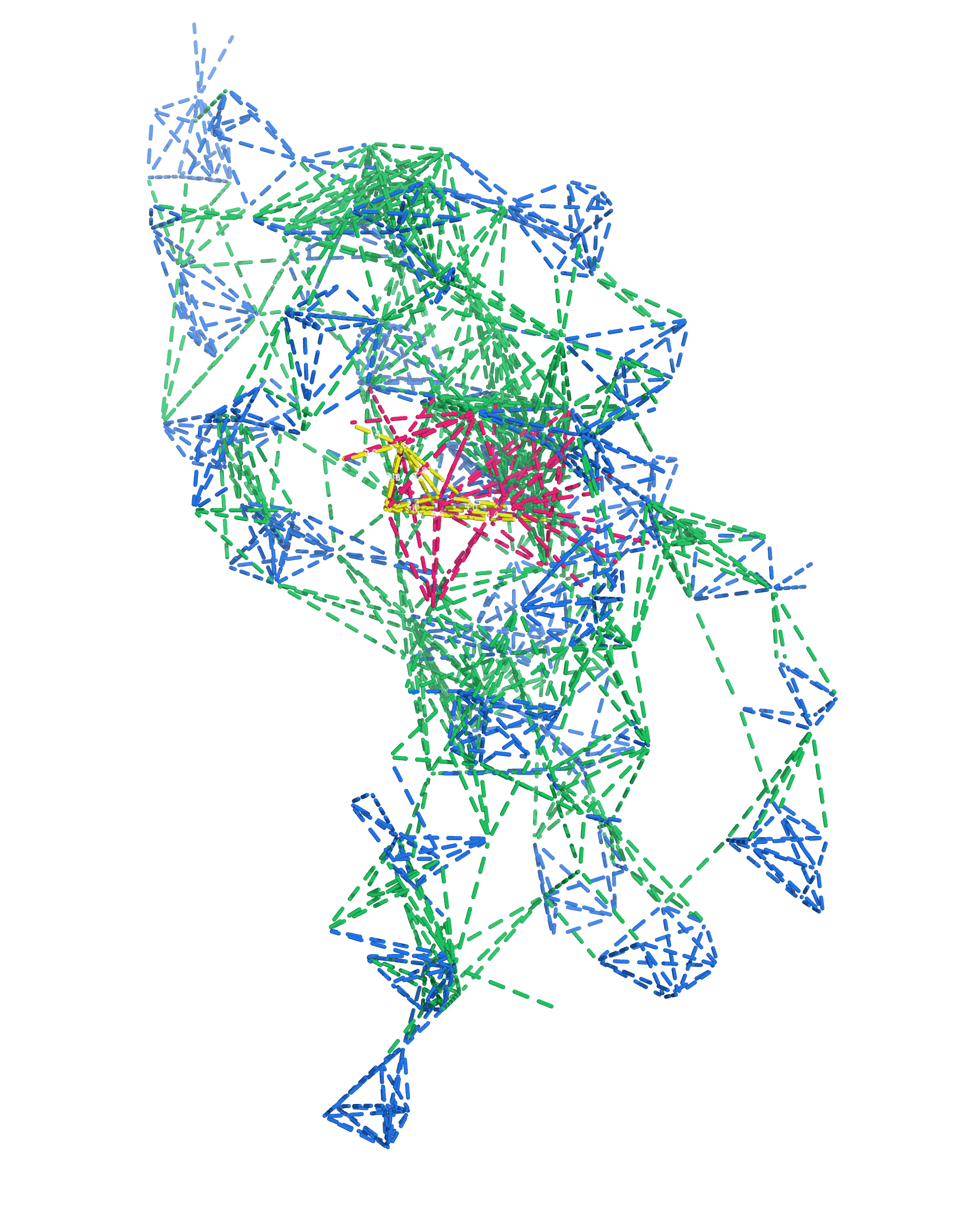
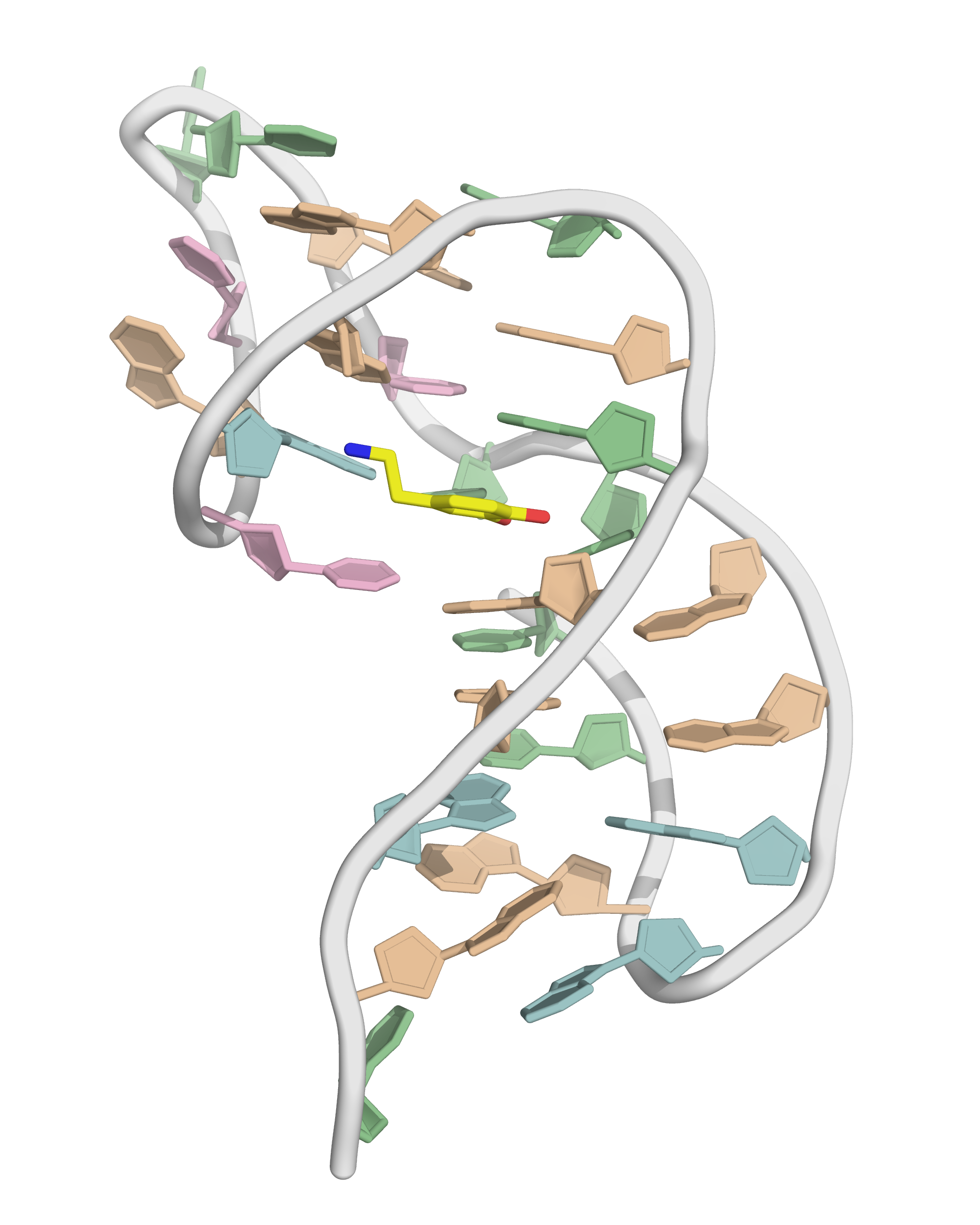
NMR provides many constraints

  • DNA (806)
    • intra-residue
    • inter-residue
  • Dopamine (67)
    • intramolecular
    • intermolecular

A four step workflow is necessary

  • System parameterization for MD
    • Force fields, solvation, ions
  • System preparation
    • Initial relaxation, density correction of mobile molecules first
  • Production
    • Short runs for minimization of initial models
    • Long runs for sampling of conformational space
  • Minimization
    • Production of an ensemble for PDB and binding site analysis

A four step workflow is necessary

  • System parameterization for MD
    • Force fields, solvation, ions
  • System preparation
    • Initial relaxation, density correction of mobile molecules first
  • System restraining
    • Distance & angles conversion to Amber format
    • Force constant tuning for optimal sampling of conformational space
  • Production
    • Short runs for minimization and longer runs for dynamics sampling
  • Minimization
    • Production of an ensemble for PDB and binding site analysis

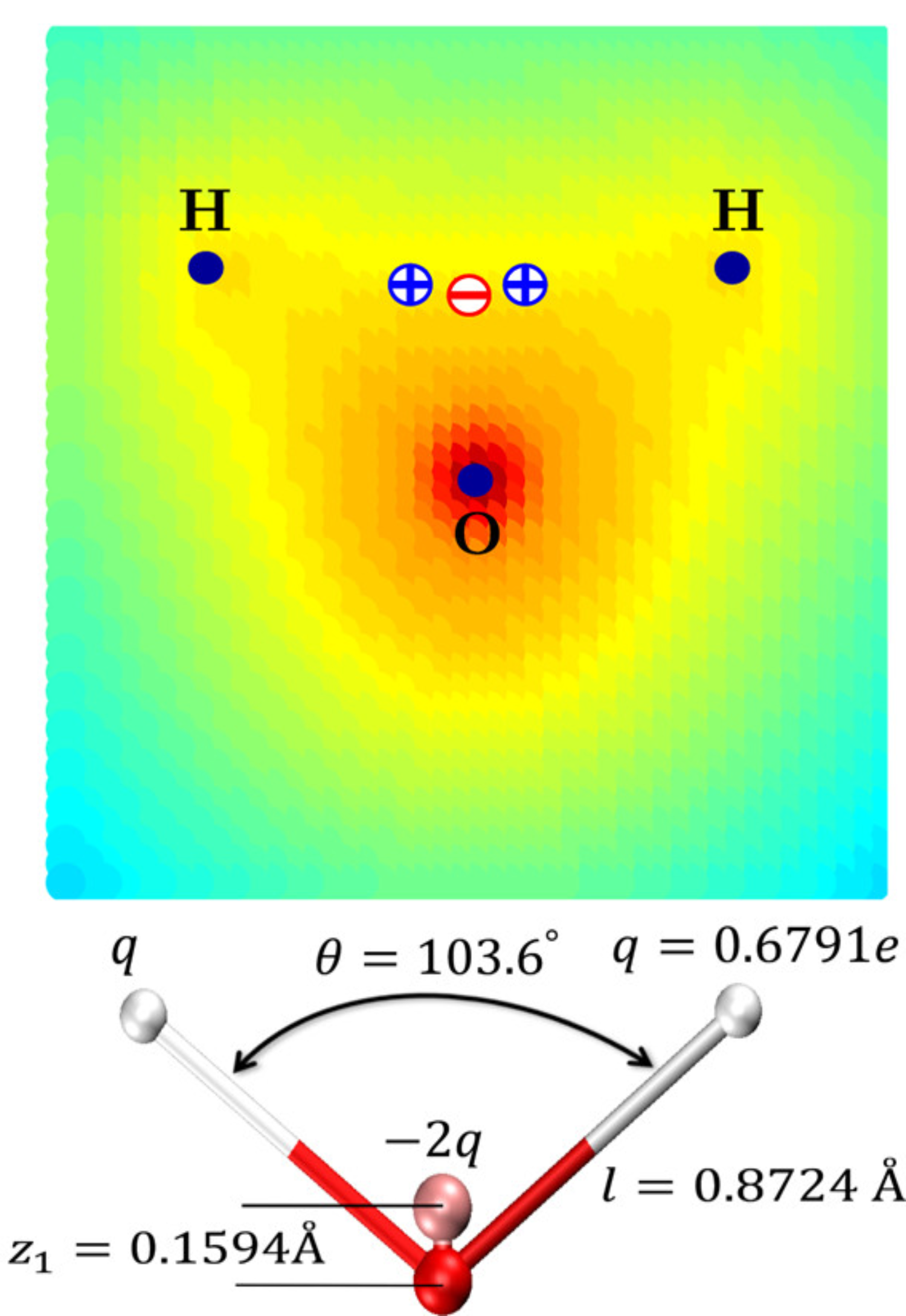
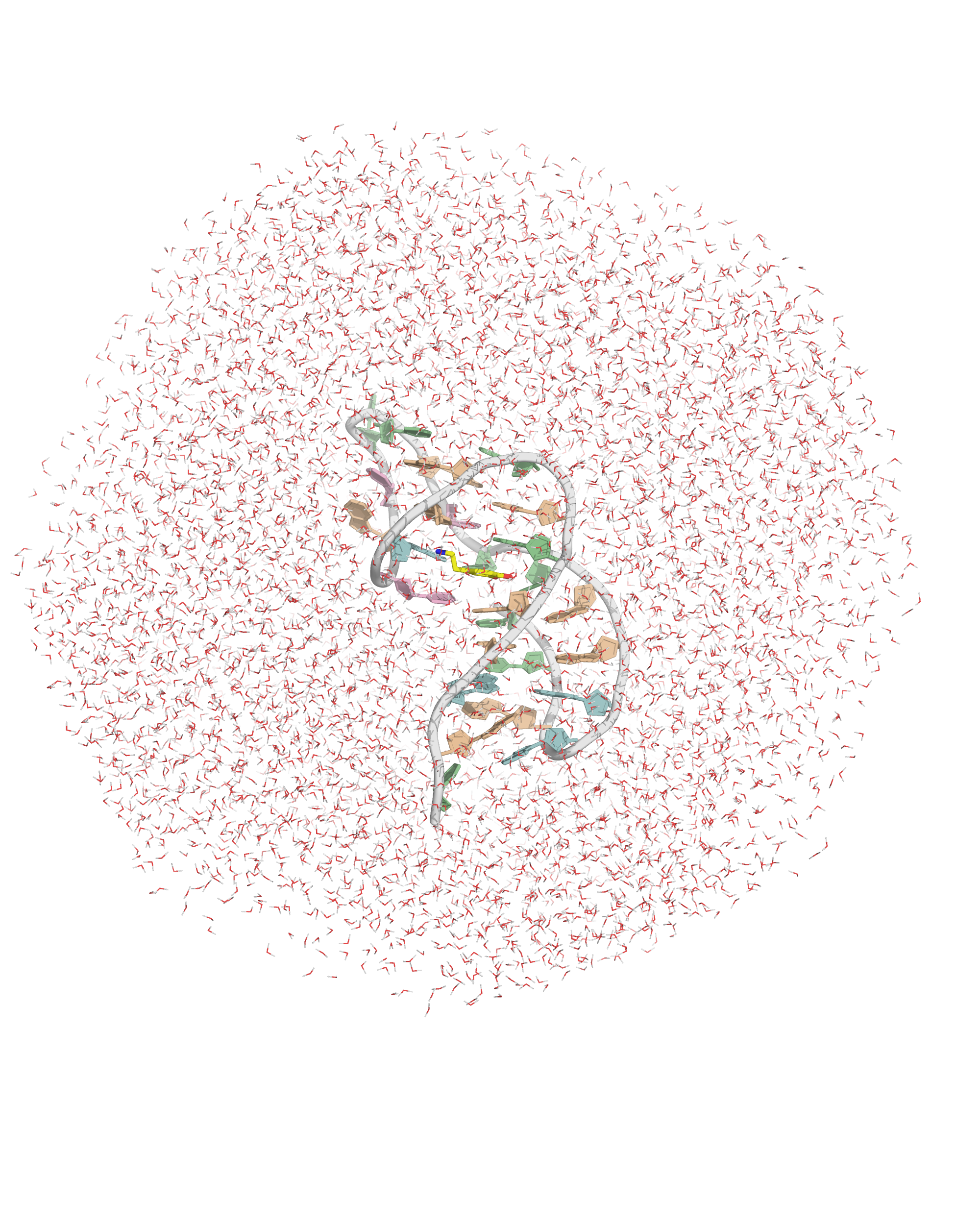
Solvation requires building a box with a model
Solvation requires building a box with a model
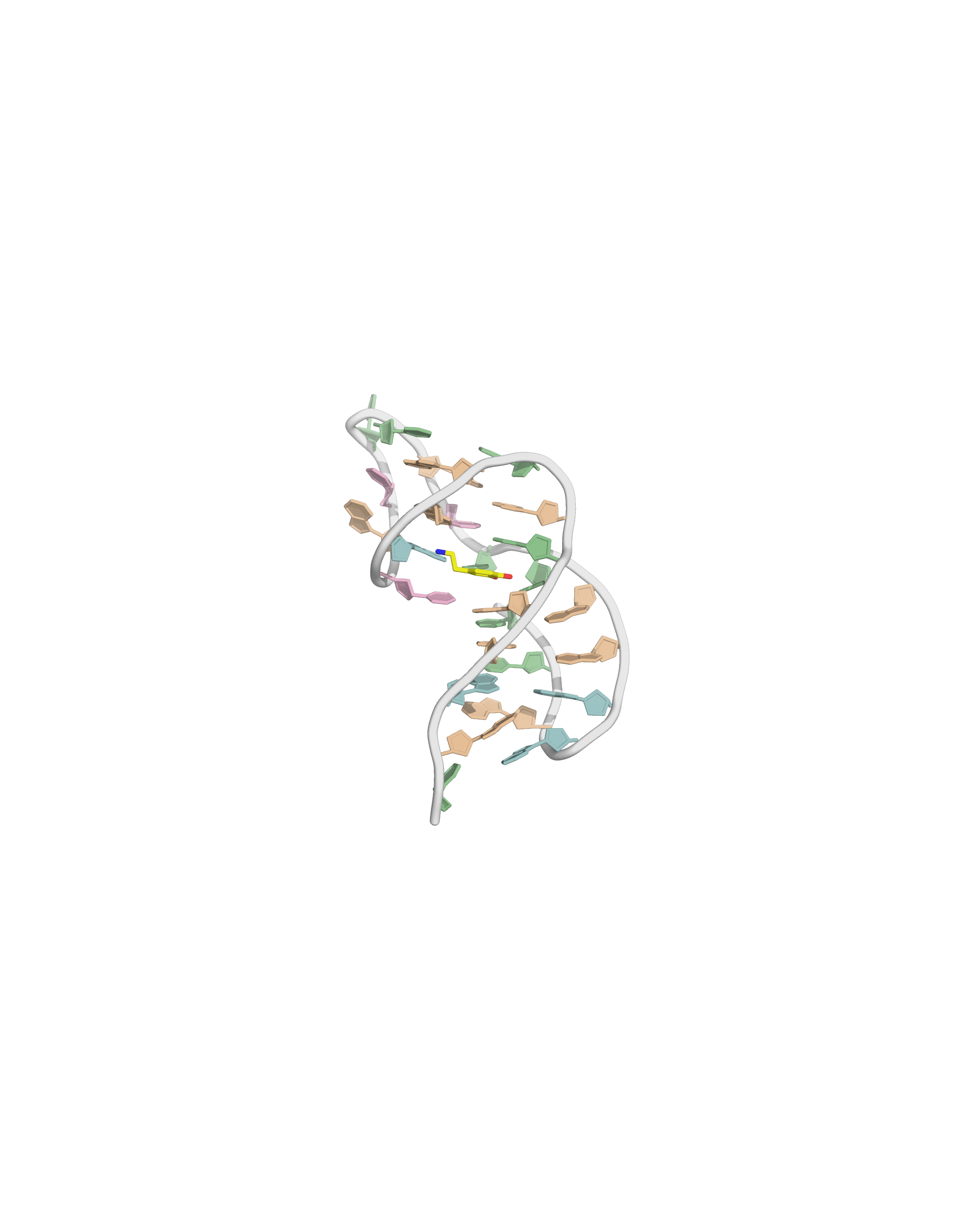
  • OPC water model
  • Octahedral box with, 14 Å to surface

Na+ ions are added to neutralize the system
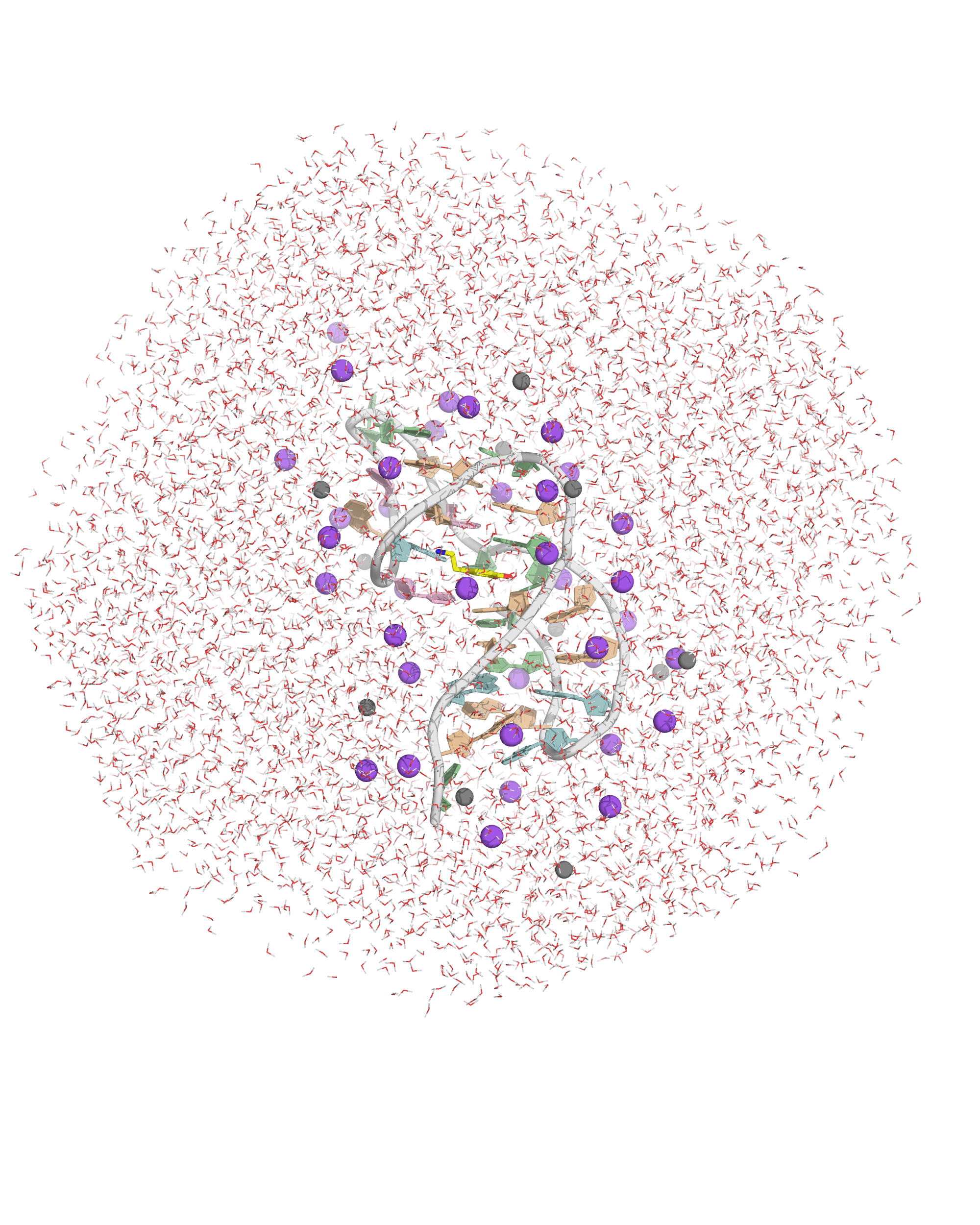
Na+ and Cl- are added to mimic experimental conditions


\(N_{\pm}=\color{#376bd3}{\nu_w}\color{#1a9c1a}{c_0}\color{#000000}e^{\mp \operatorname{arcsinh}\!\left(\frac{\color{#b92424}{Q}}{2\color{#376bd3}{\nu_w}\color{#1a9c1a}{c_0}}\right)}\)

  • \(\color{#376bd3}{\nu_w}\): water volume of the box (~ 3x10⁵ Å3)
  • \(\color{#1a9c1a}{c_0}\): salt concentration (140 mM)
  • \(\color{#b92424}{Q}\): charge (-25)

One or several force fields must be used for biomolecules
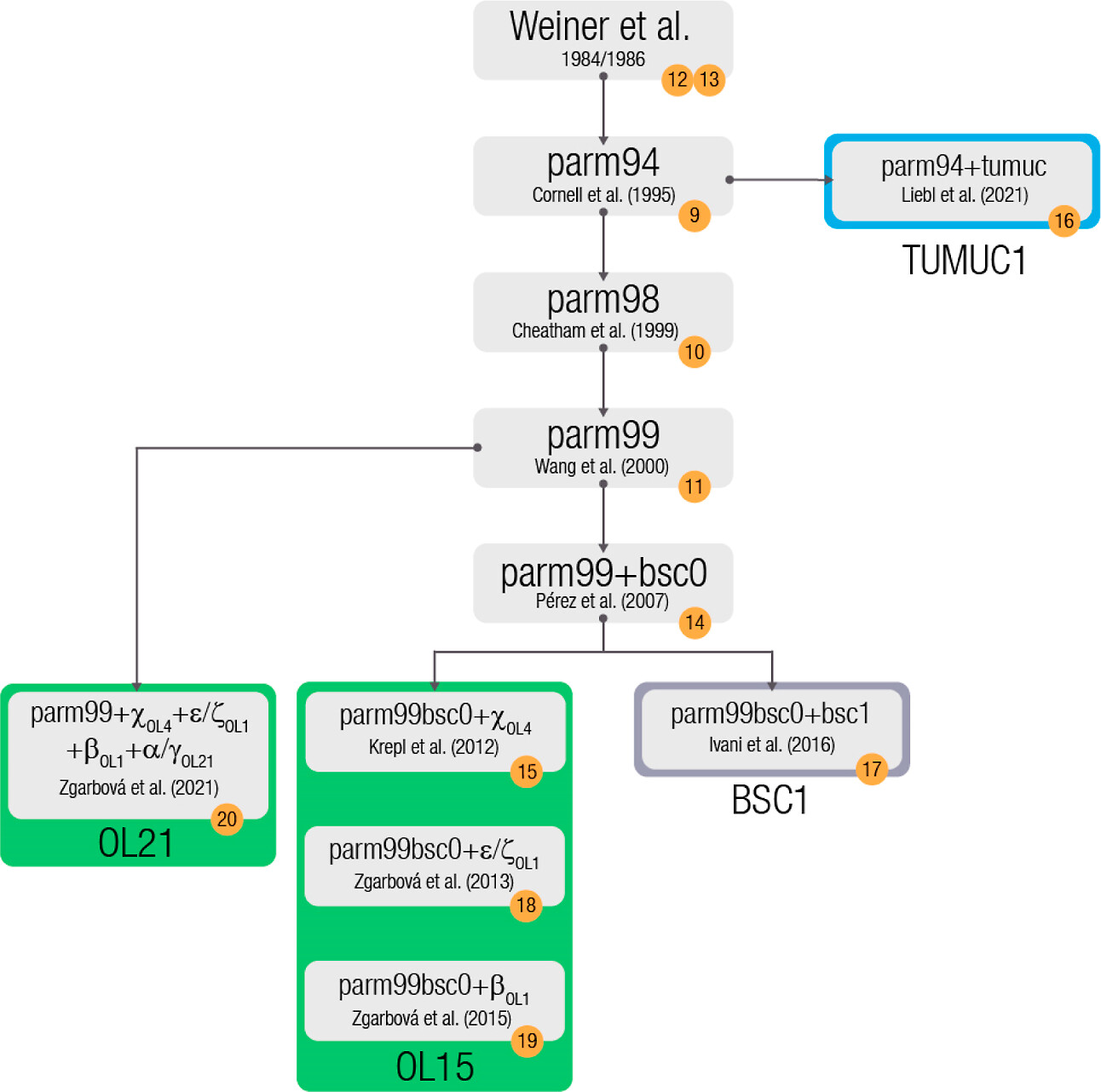
Where necessary, parameters for ligands must be generated


High-performance computing considerations

  • Microsecond-scale simulations require GPUs
  • Risk of overflow with GPUs for large forces (close contacts)
    • CPUs preferred for preparation/minimization steps (double precision)
  • GPU and CPU calculations performed with AMBER
    • Particle Mesh Ewald Molecular Dynamics (PMEMD) engine, CUDA version for GPUs
    • GPU: NVIDIA H100 PCIe Tensor core (~ 40 k€ 💸)
    • DOREMI CALI v3 cluster of the MCIA high-performance computing mesocenter (U. Bordeaux, France)
  • Simulations ran
    • At constant temperature (298 K) and pressure (1 atm)
    • With (rMD) and without (uMD) NMR restraints
    • 10 ns followed by minimization for PDB deposition
    • 1 µs production runs for analysis of the dynamics

Minimized ensemble production by short, restrained MD simulations

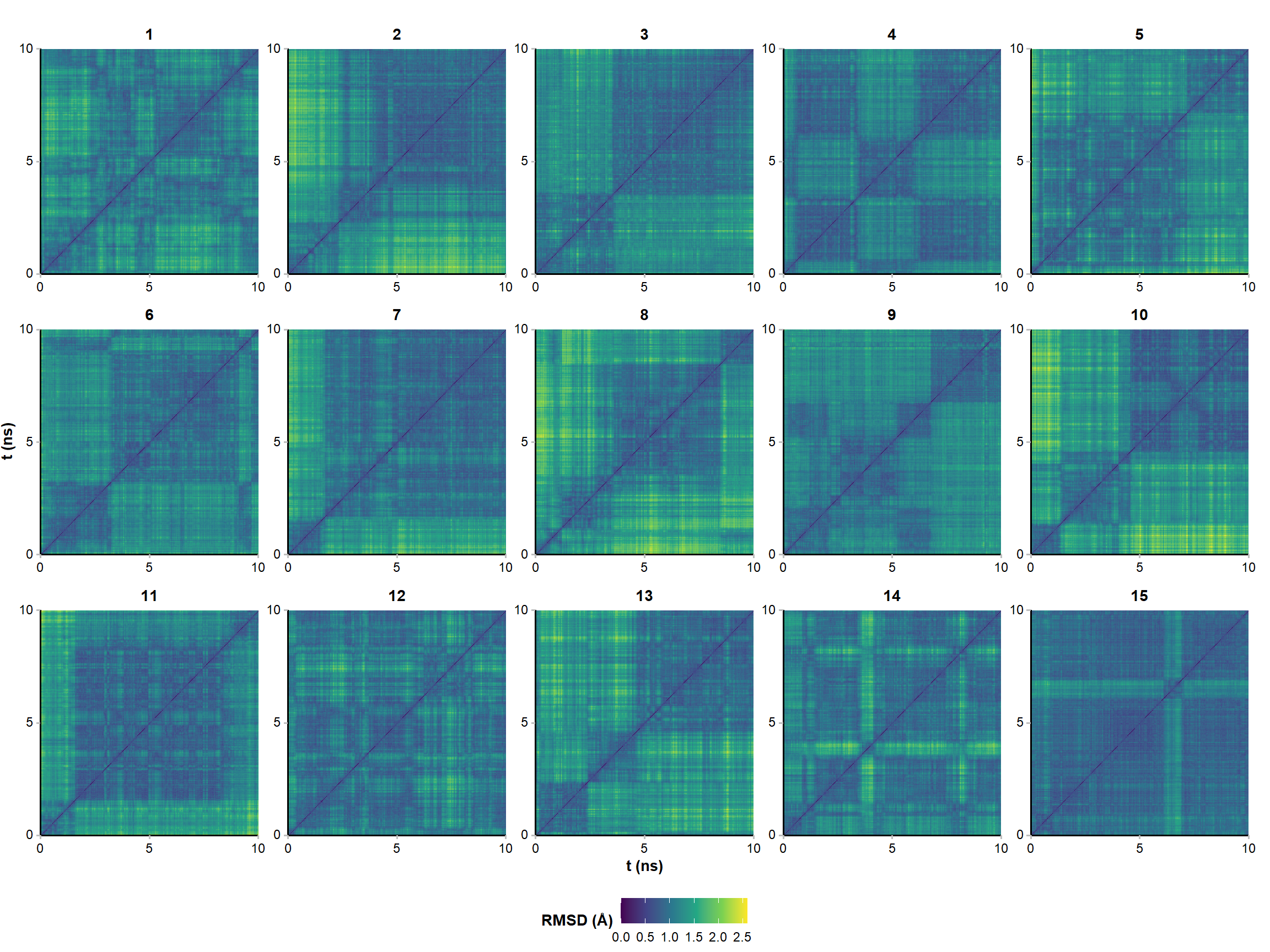
10-ns trajectories are stable RMSD-wise
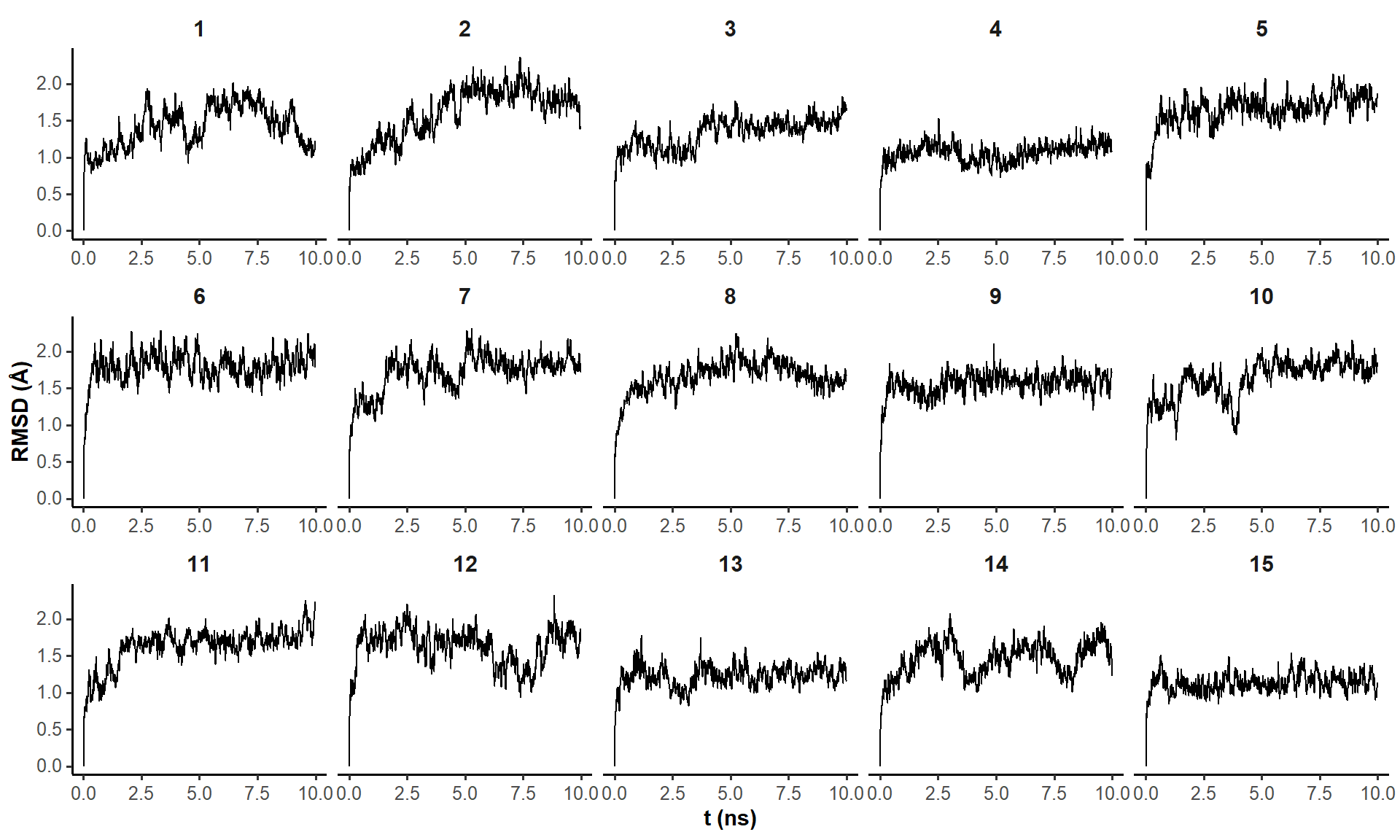
Pairwise RMSD analysis is more informative
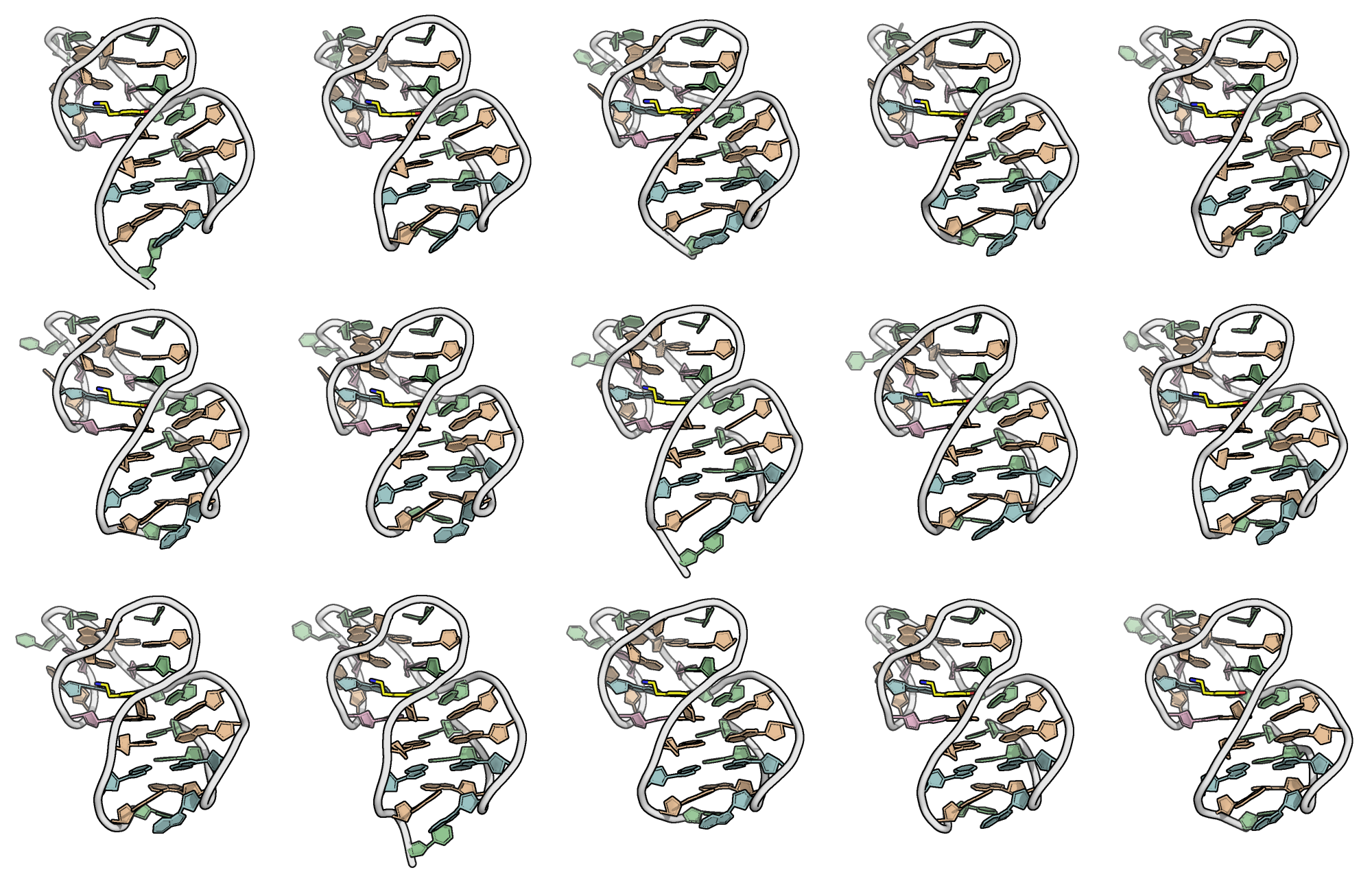
The end point of 15 runs are minimized
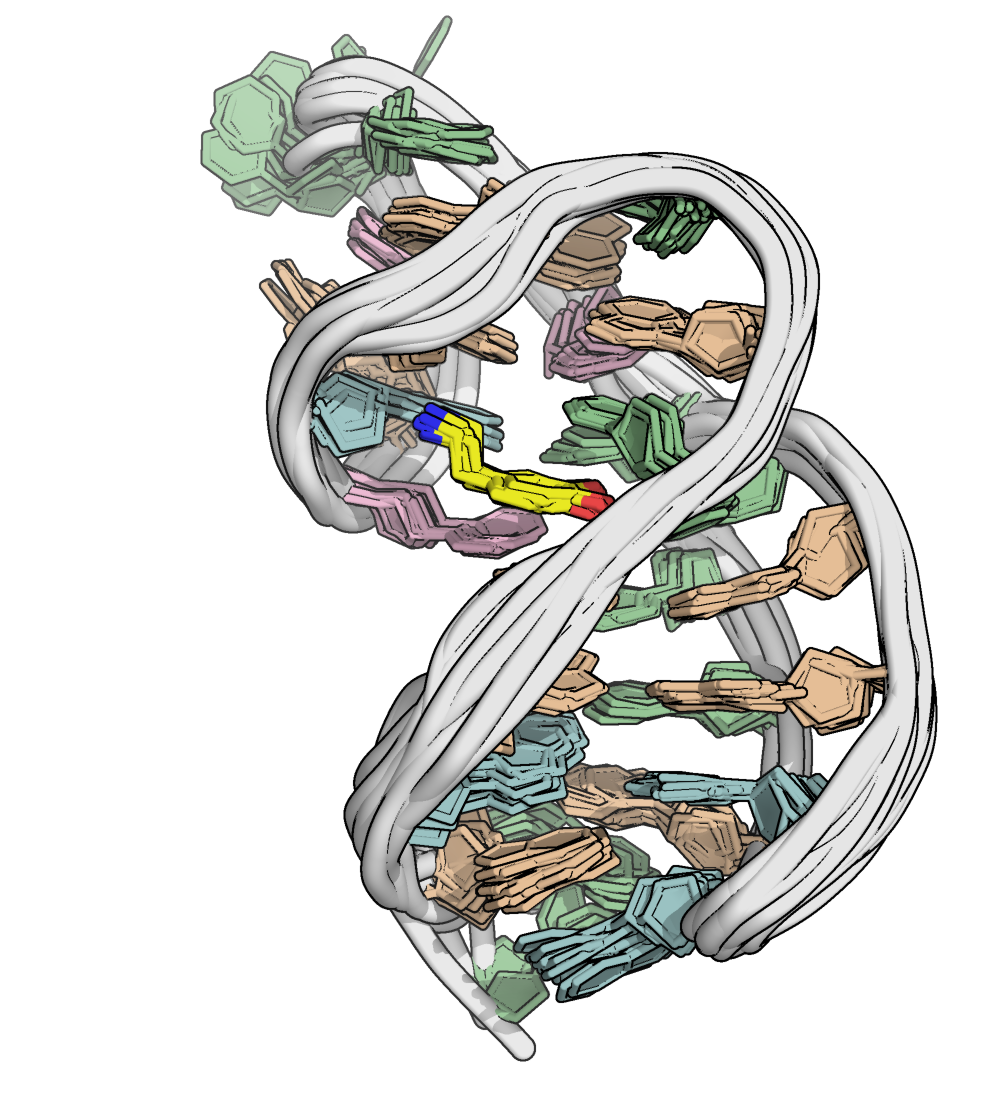
Superimposition reveals a well-defined binding pocket
NMR restraints are satisfied

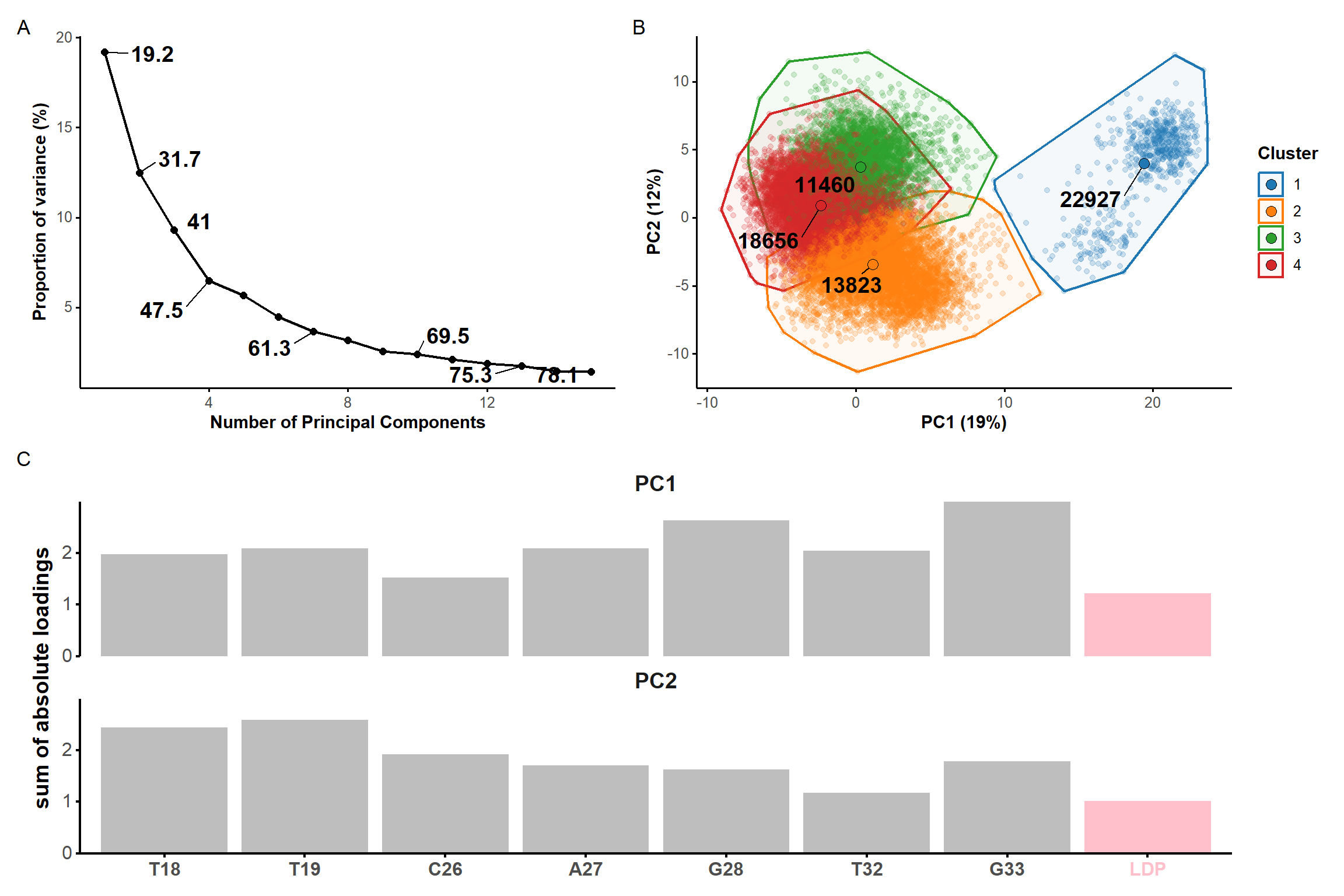
Exploration of the
conformational landscale
through microsecond simulations

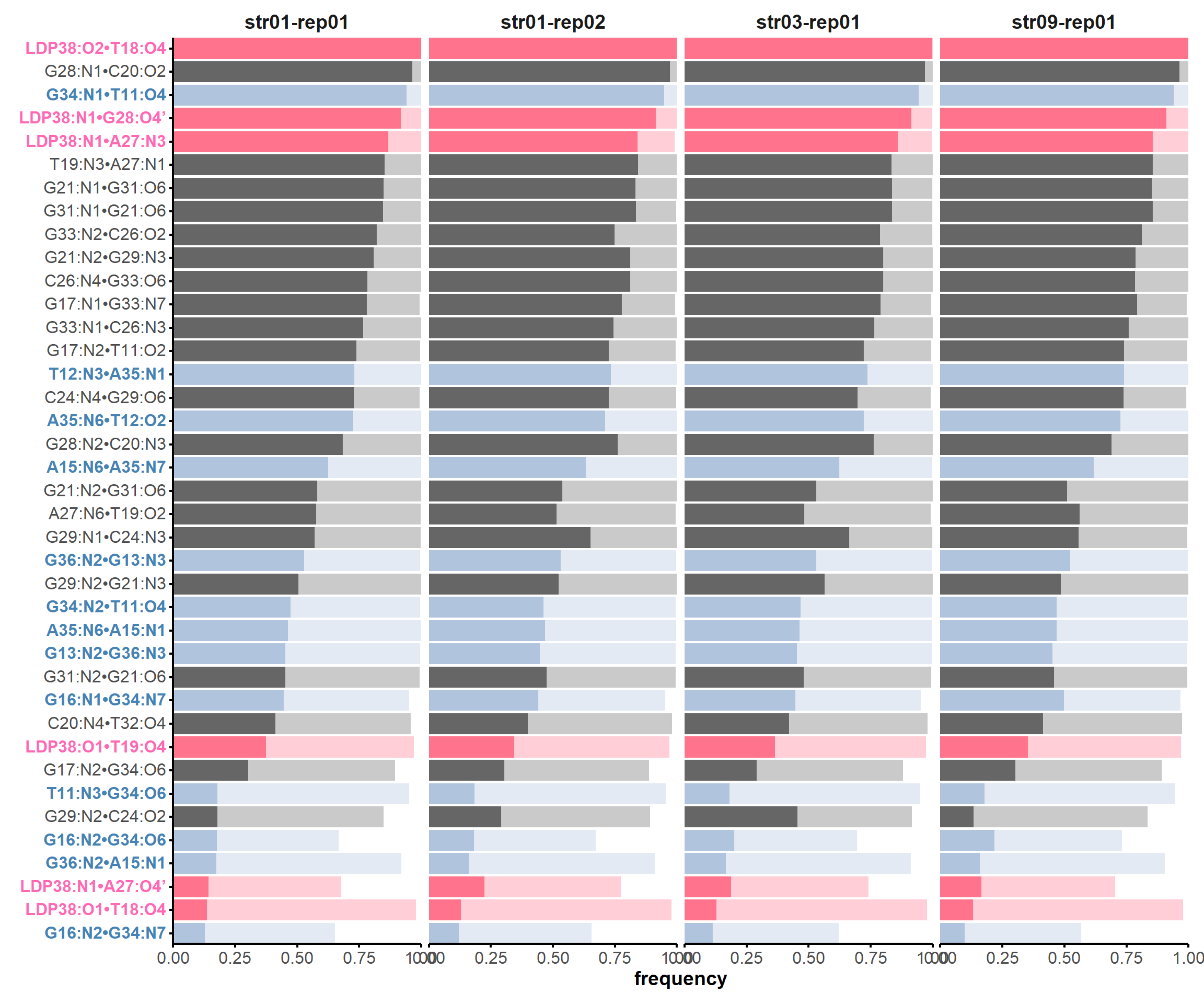
Replication is necessary (at least to publish!)
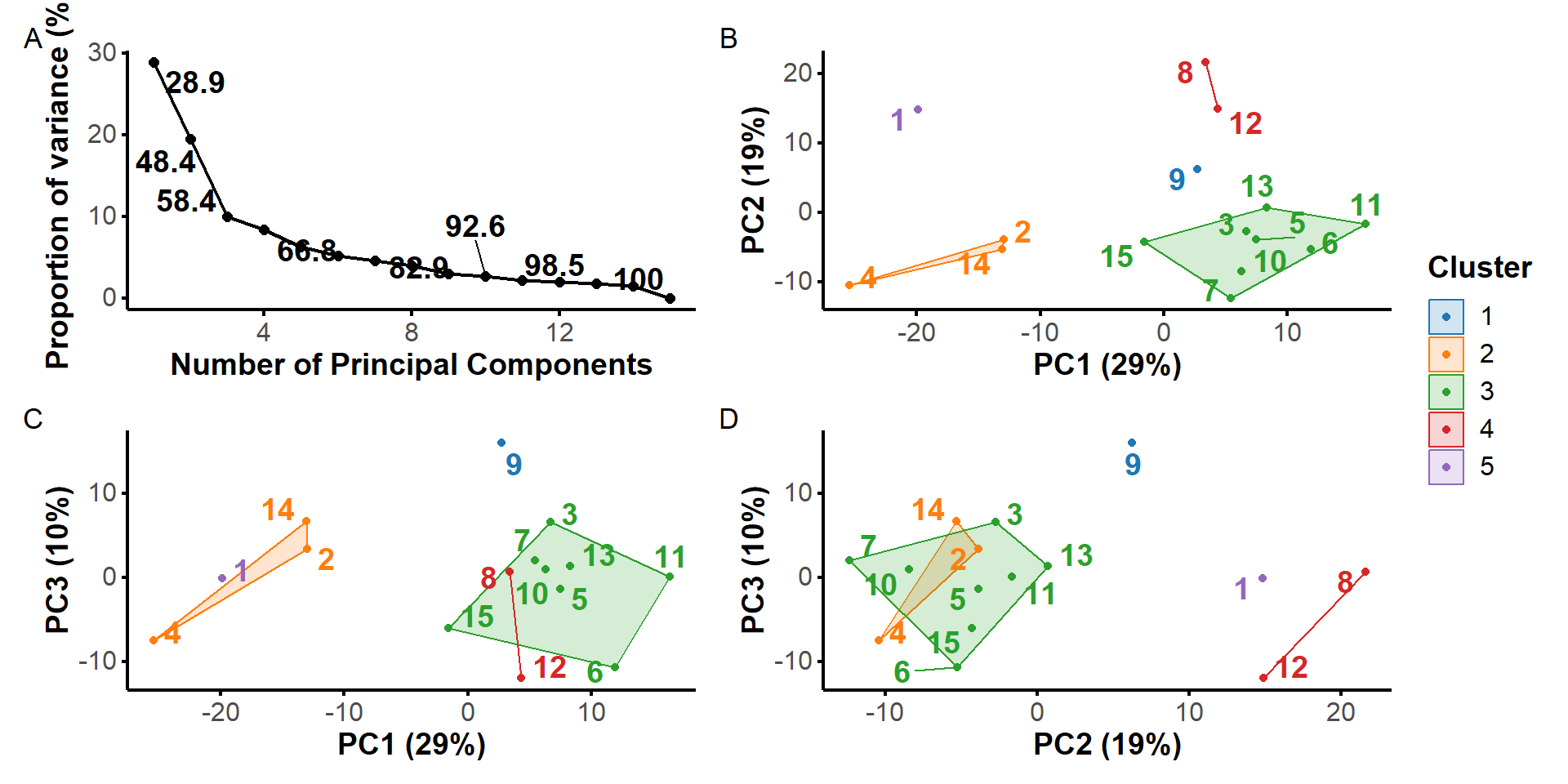
Longer simulations are stable and reproducible
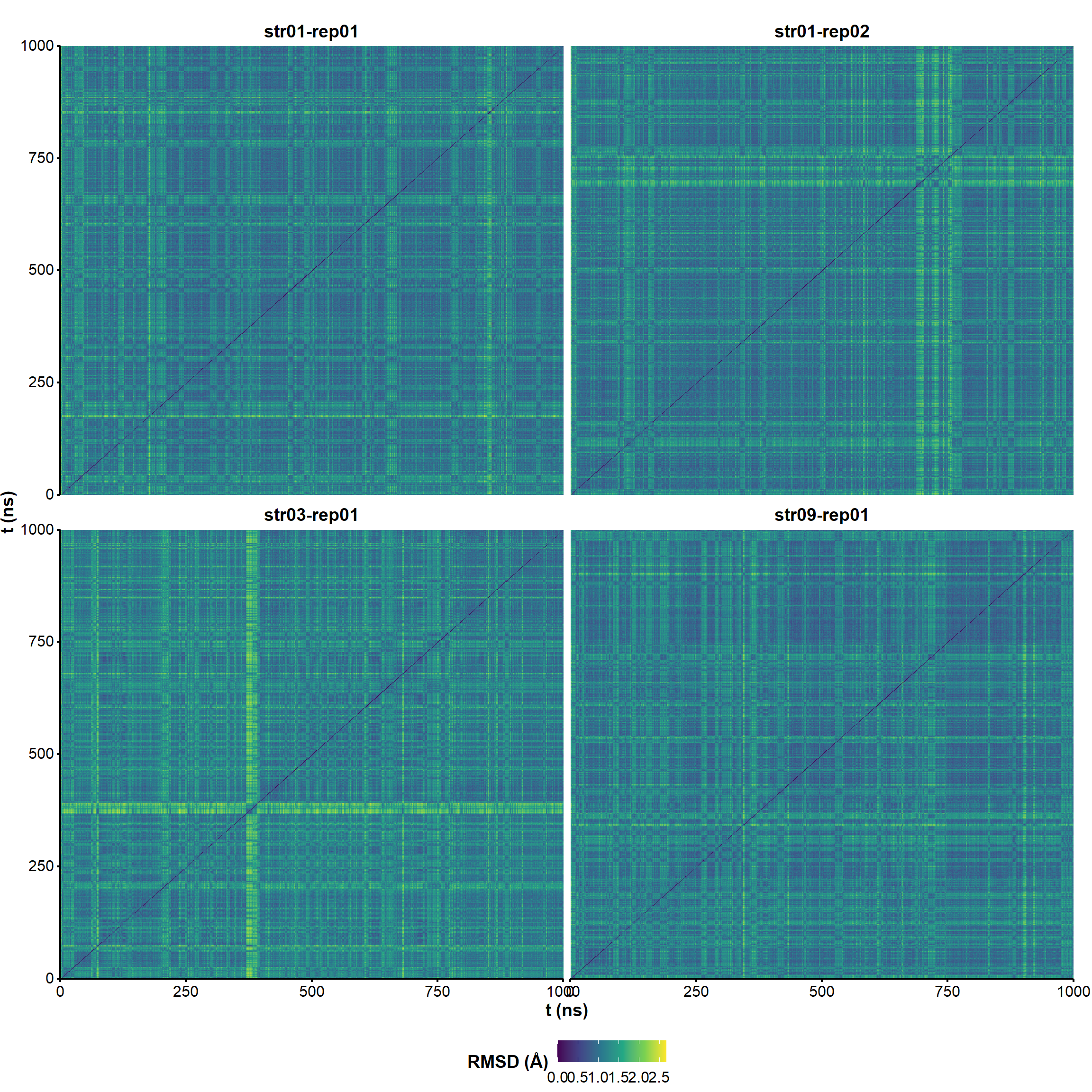
Replicates and unrestrained simulations demonstrate
the robustness of the model

Exploring non-canonical features

Non-WC base pairs and triplets

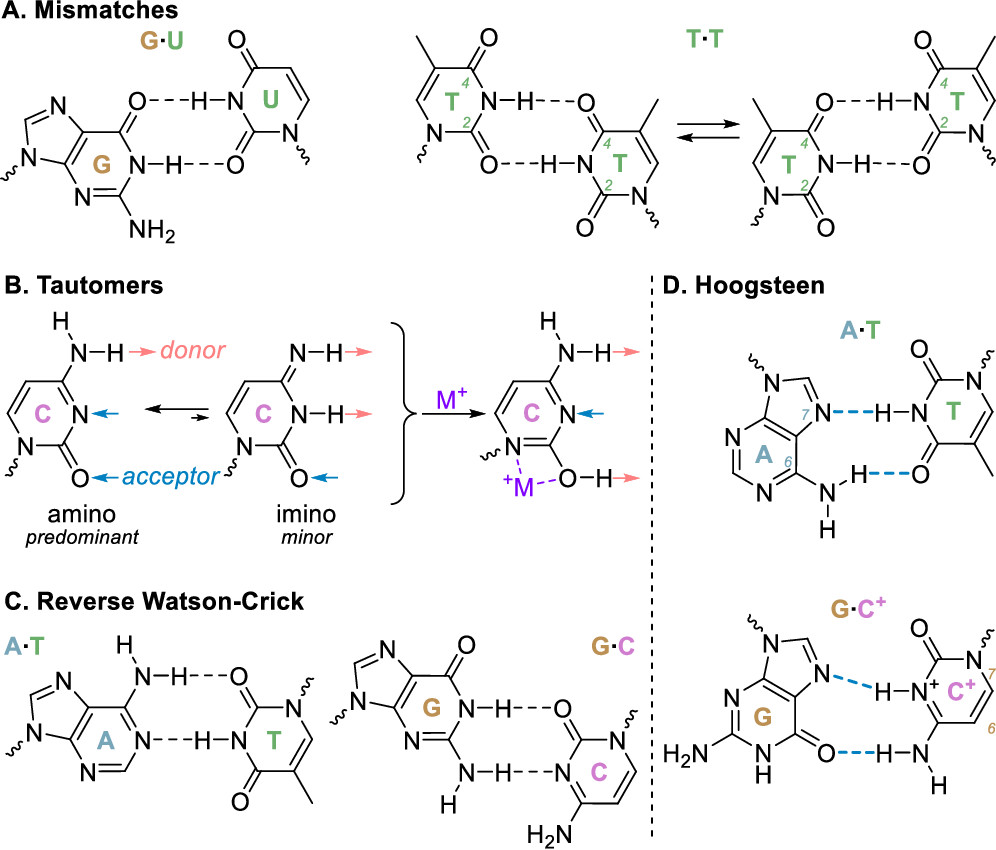
Base pairing is mostly non-canonical

Only two WC base pairs are present
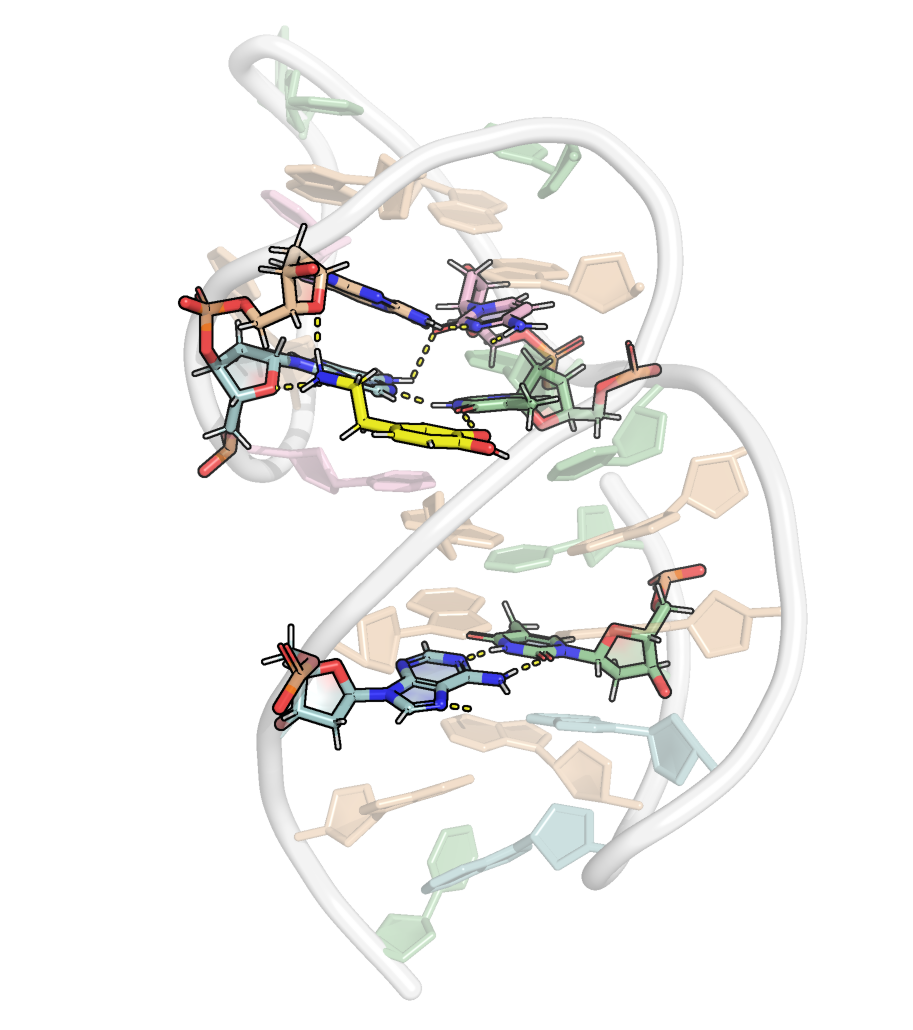
WC

rWC

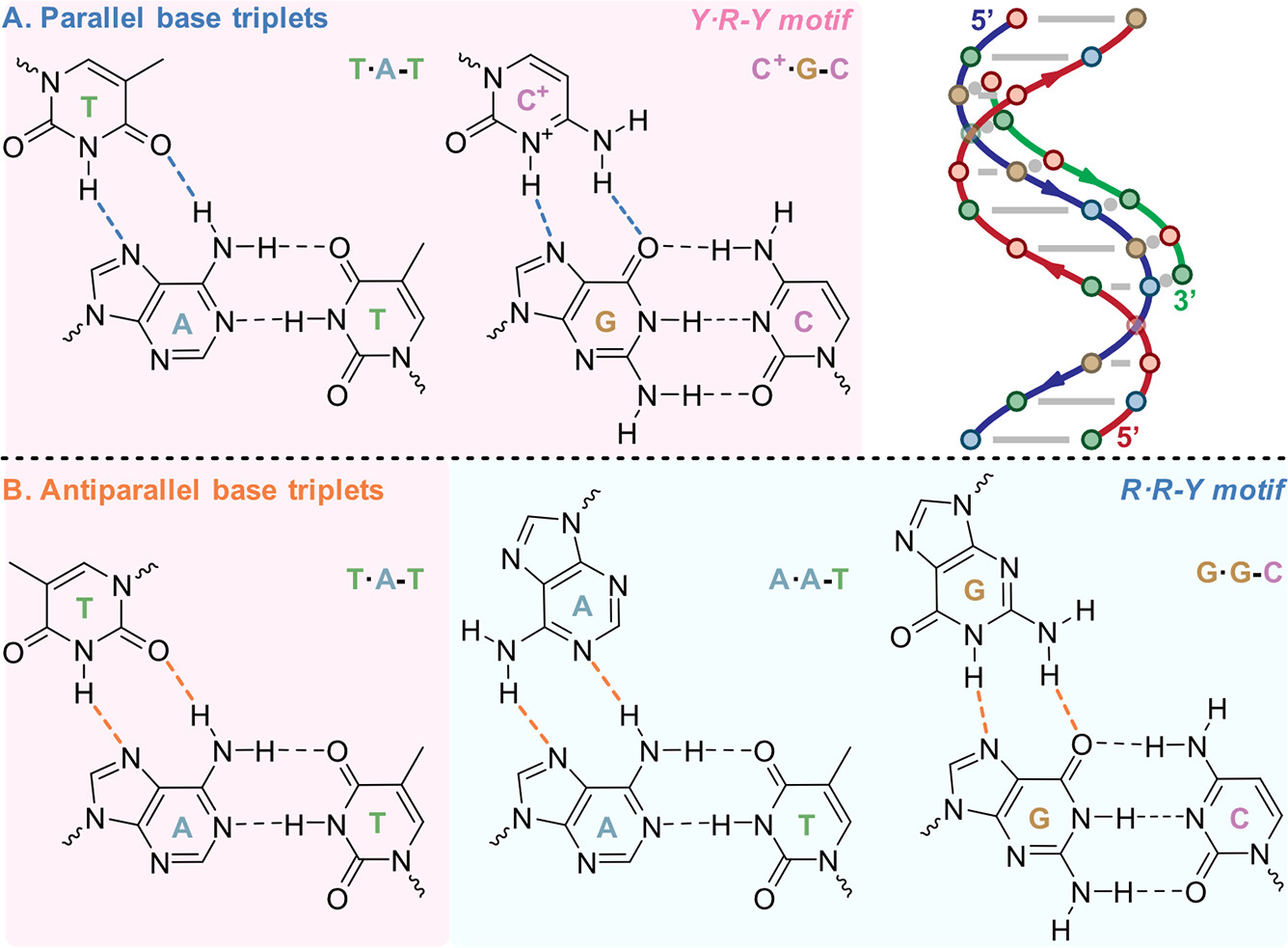
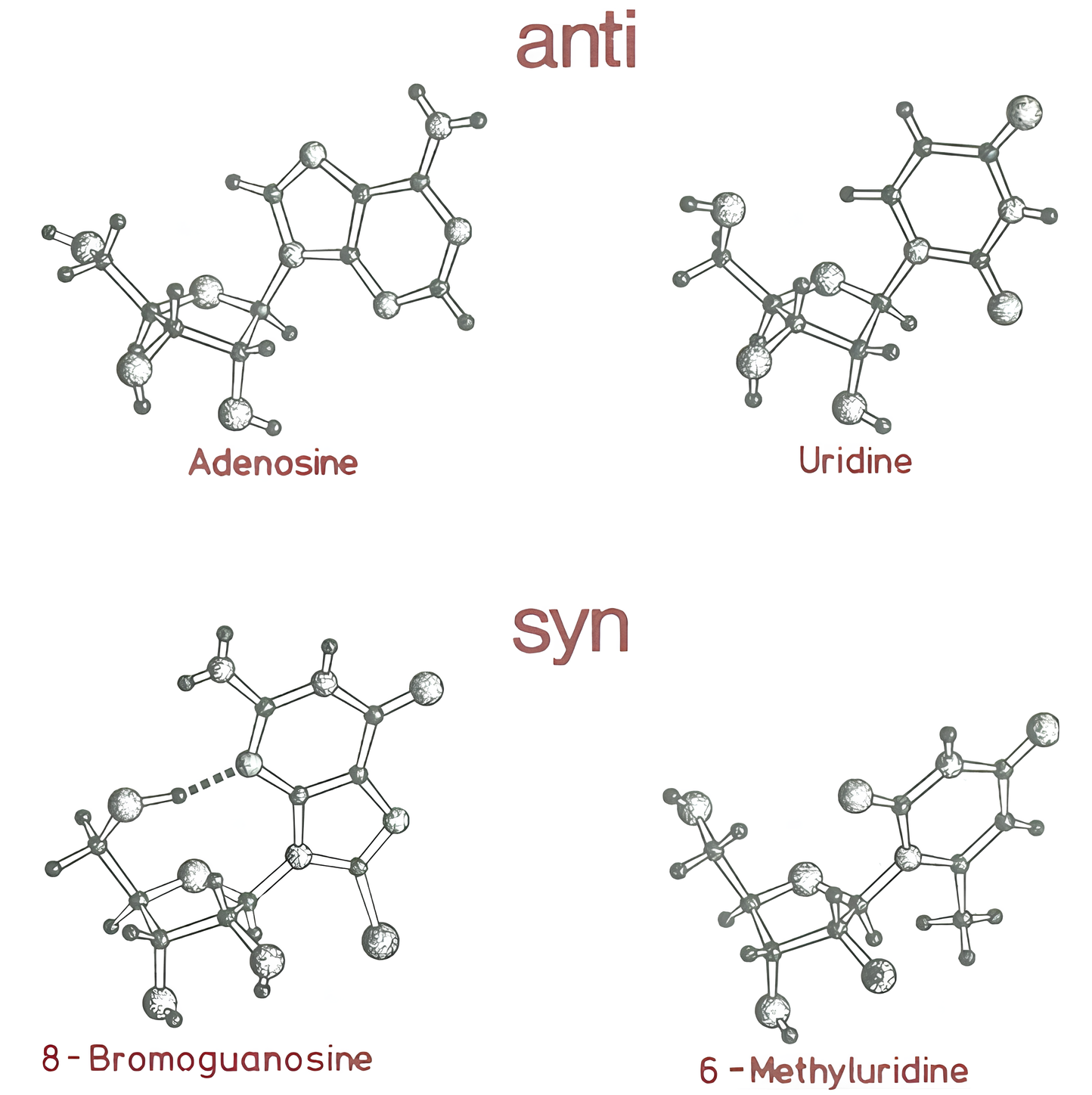
Presence of base triplets with syn glycosidic bond angle
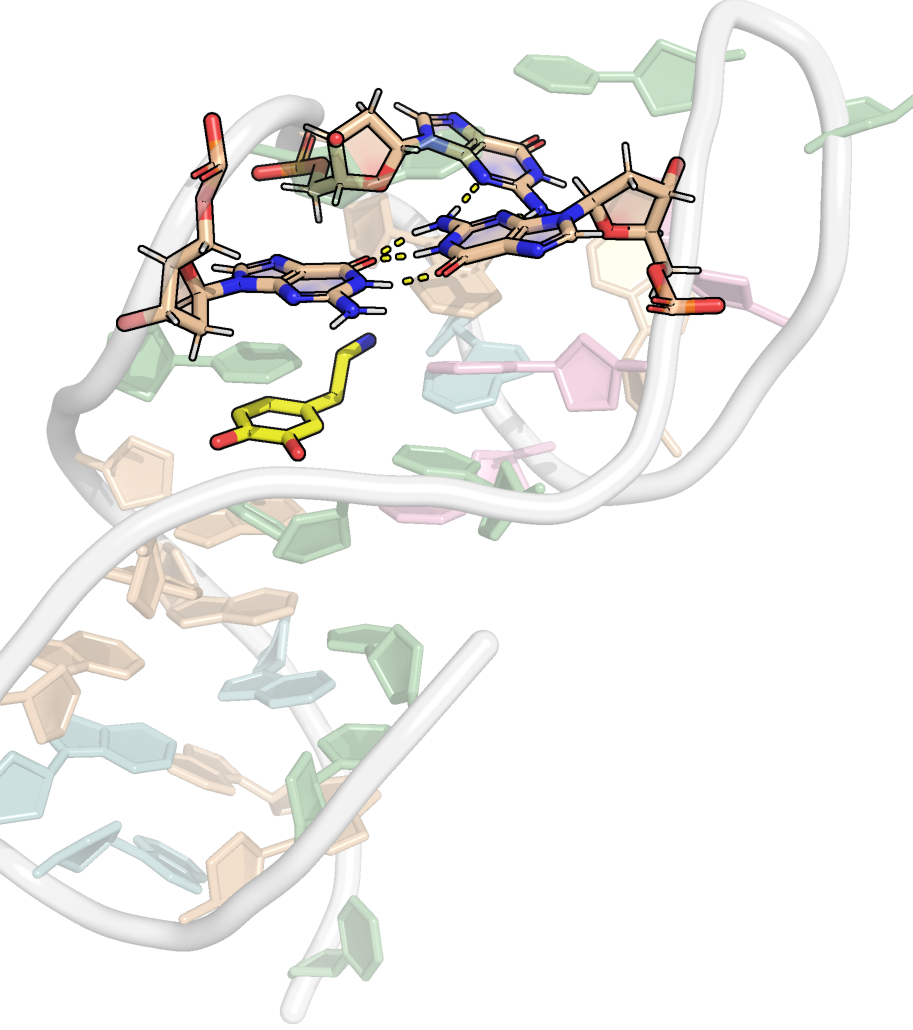
Non-canonical base pair between G31 and G21 (tW+W), within a triplet with G29 (tm+m)

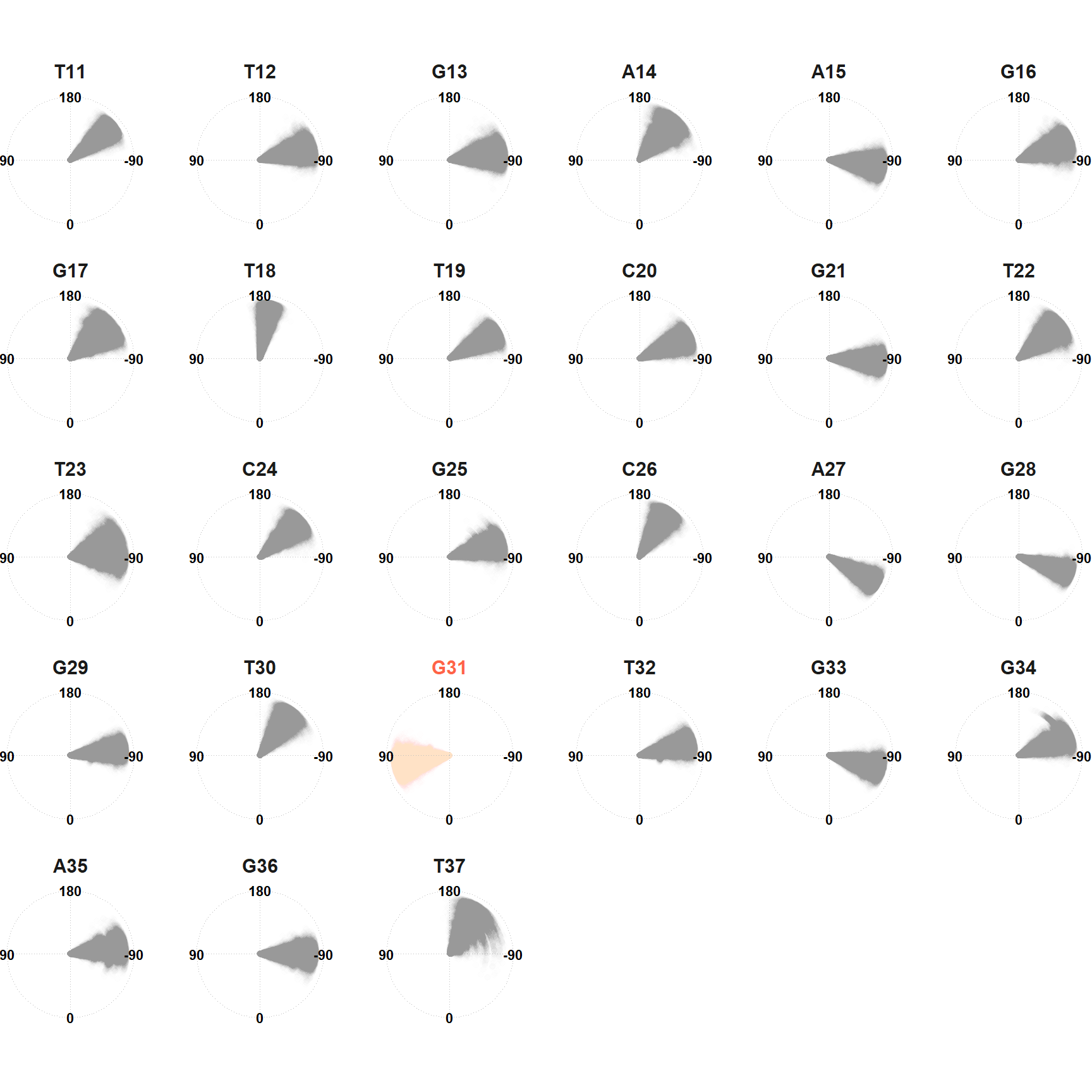
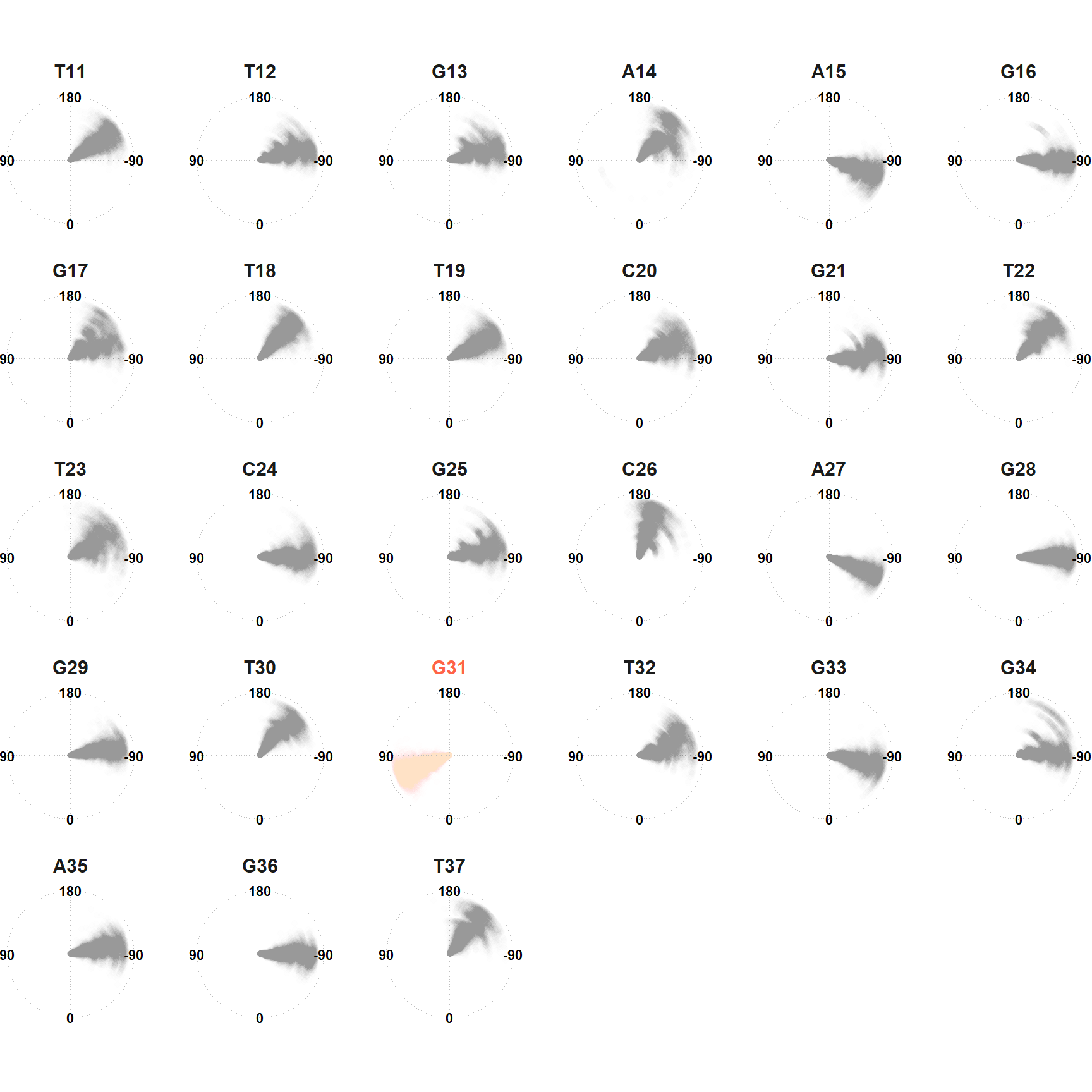
Dihedral angles are stable along the simulation
Restrained MD | Syn and Anti angles shown from inside to outside along trajectory

Unrestrained MD | Syn and Anti angles shown from inside to outside along trajectory

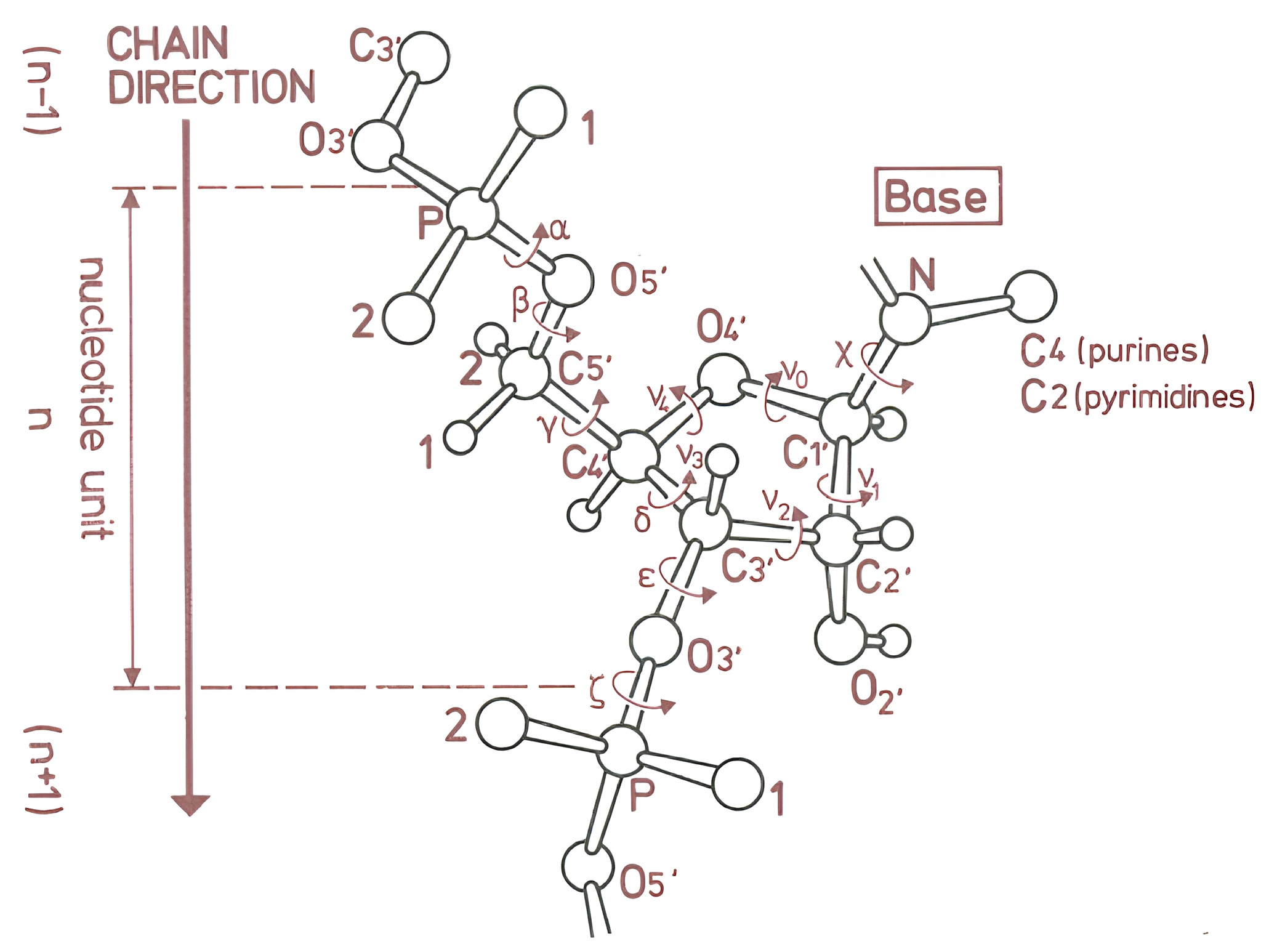
Binding requires non-canonical puckers


\[\color{#F0A308}\theta_M \color{#000000}= \frac{\color{#376bd3}\nu_2}{\cos \color{#279400}P}\]

\[\tan \color{#279400}P \color{#000000}= \frac{(\color{#008594}\nu_4 \color{#000000}+ \color{#A91FB6}\nu_1\color{#000000})-(\color{#940000}\nu_3 \color{#000000}+ \color{#947E00}\nu_0\color{#000000})}{2\color{#376bd3}\nu_2\color{#000000}(\sin(\frac{\pi}{5}) + \sin(\frac{2\pi}{5}))}\]

Binding requires non-canonical puckers
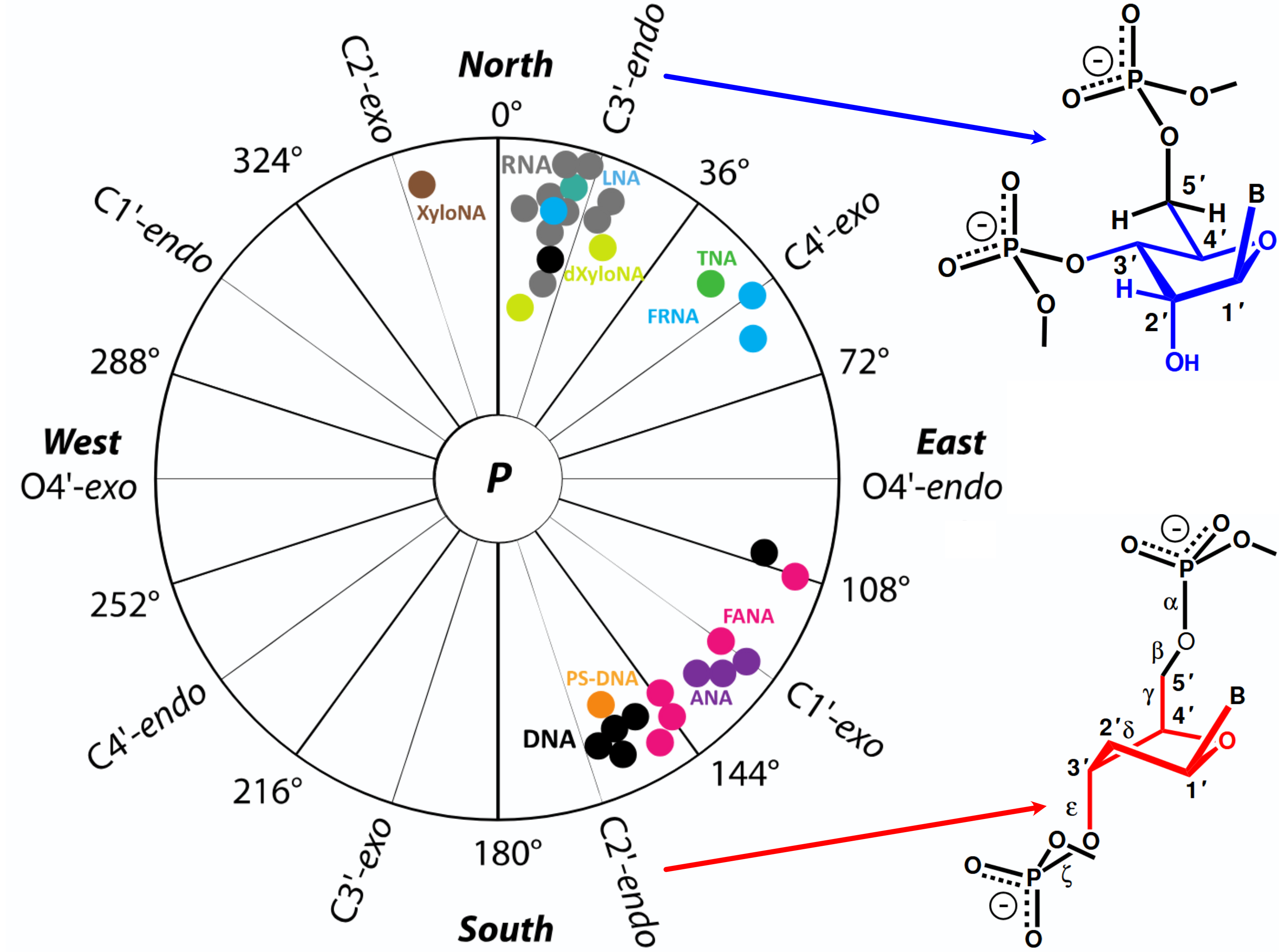
Binding requires non-canonical puckers
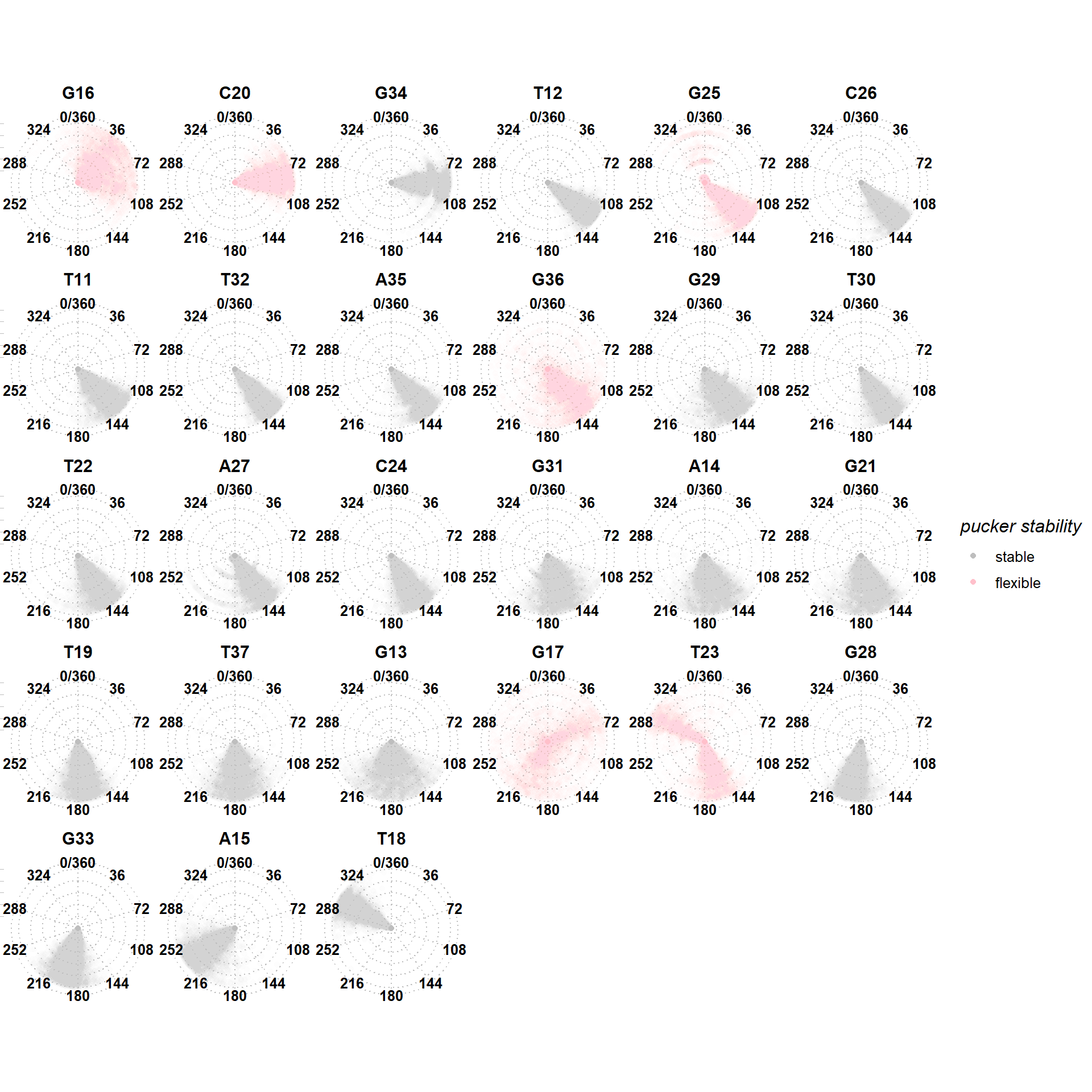
Restrained MD | Flexible and stable pucker angles shown from inside to outside along trajectory

Binding requires non-canonical puckers
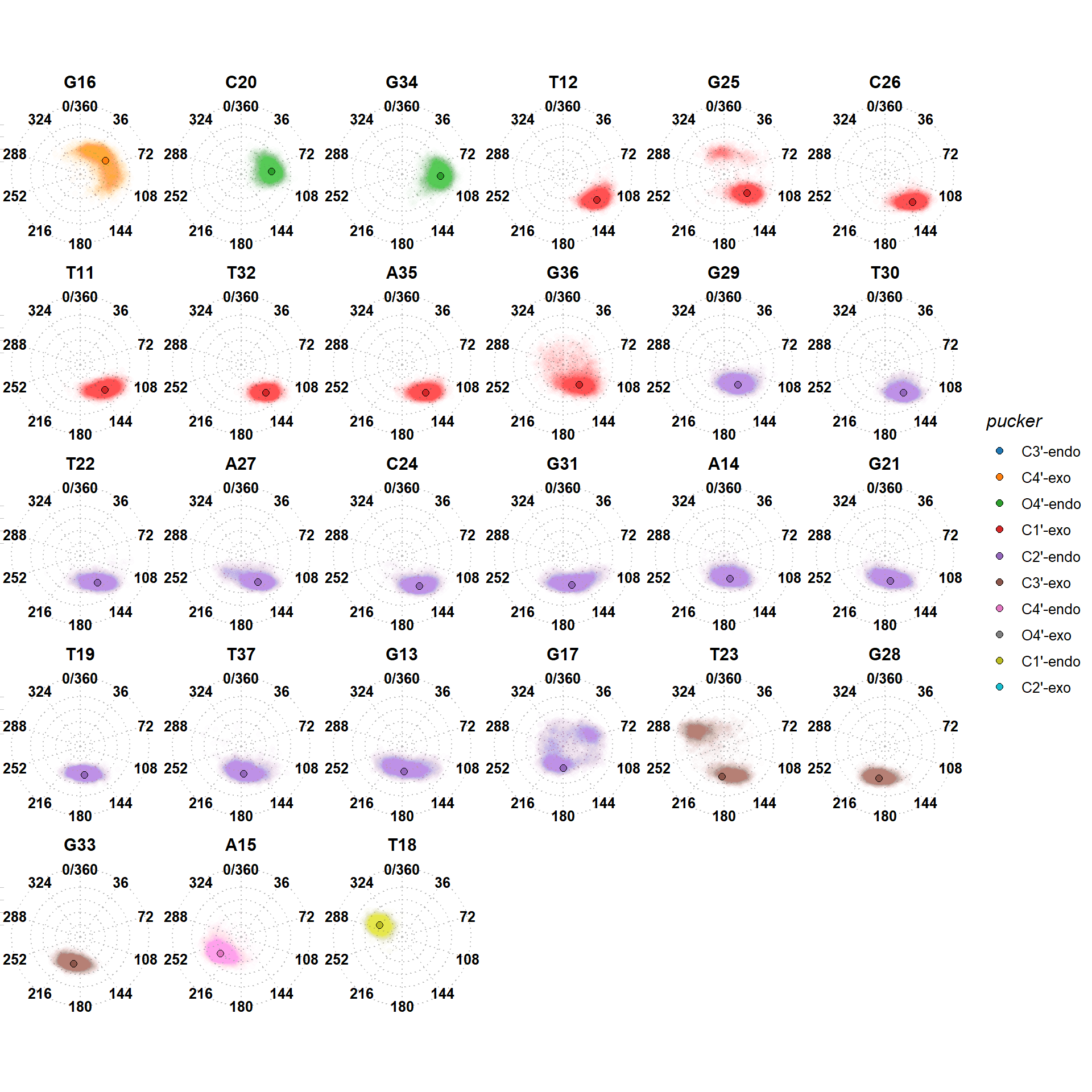
Restrained MD | Pucker angle and amplitude colored by mean angle value

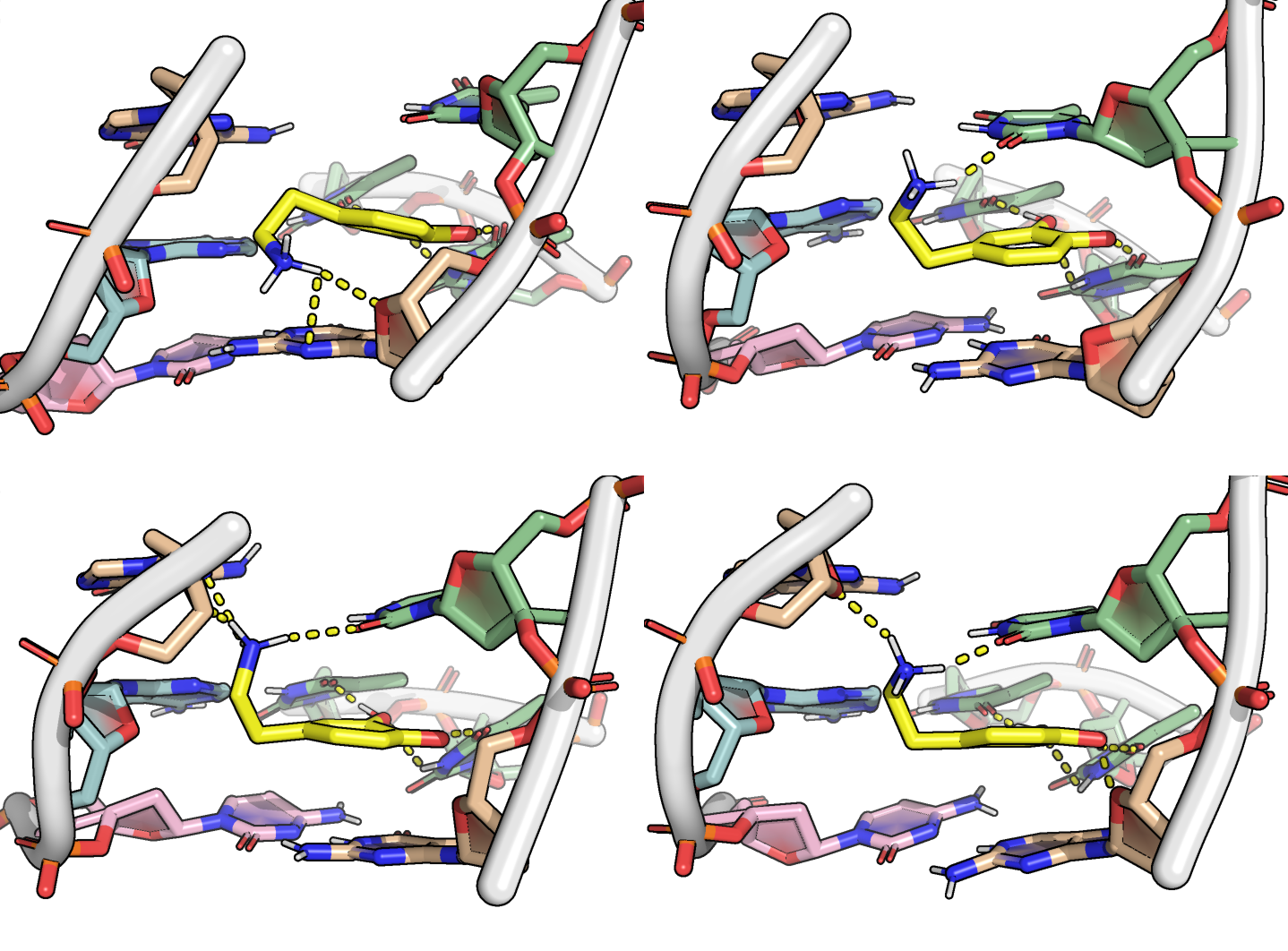
T18 adopts a C1’-endo pucker upon binding
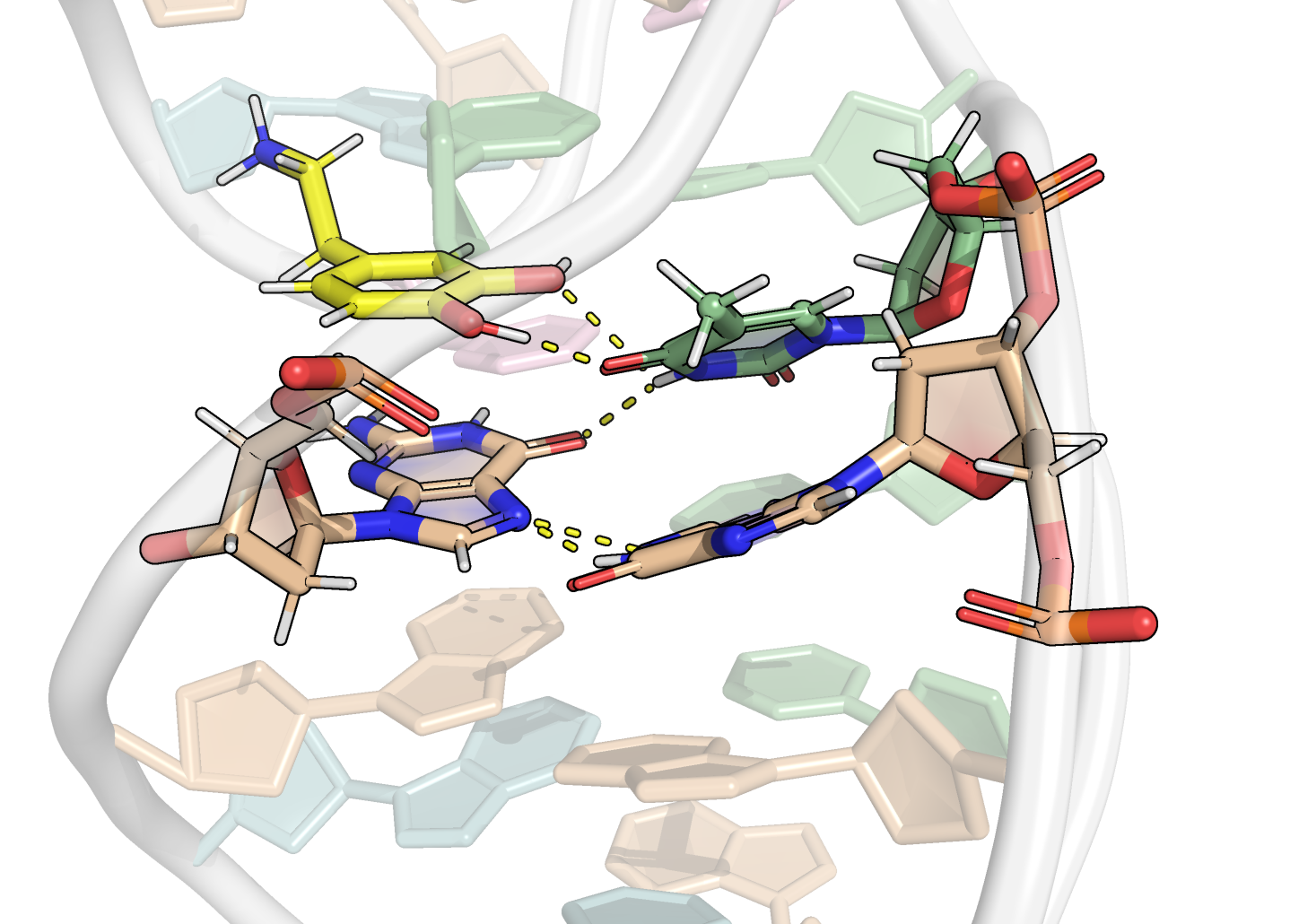
T18 tightly bound to dopamine | stacked on G17 | tWH “base pair” with G33

Focus on the binding site

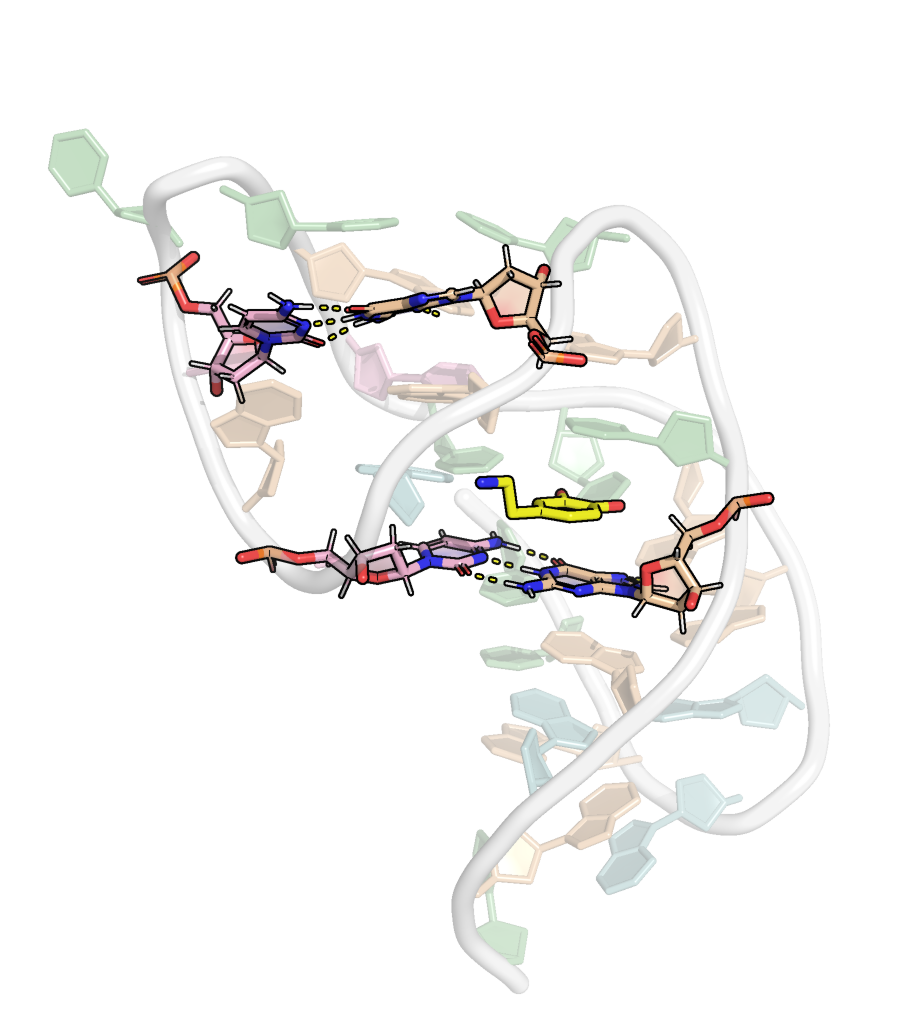
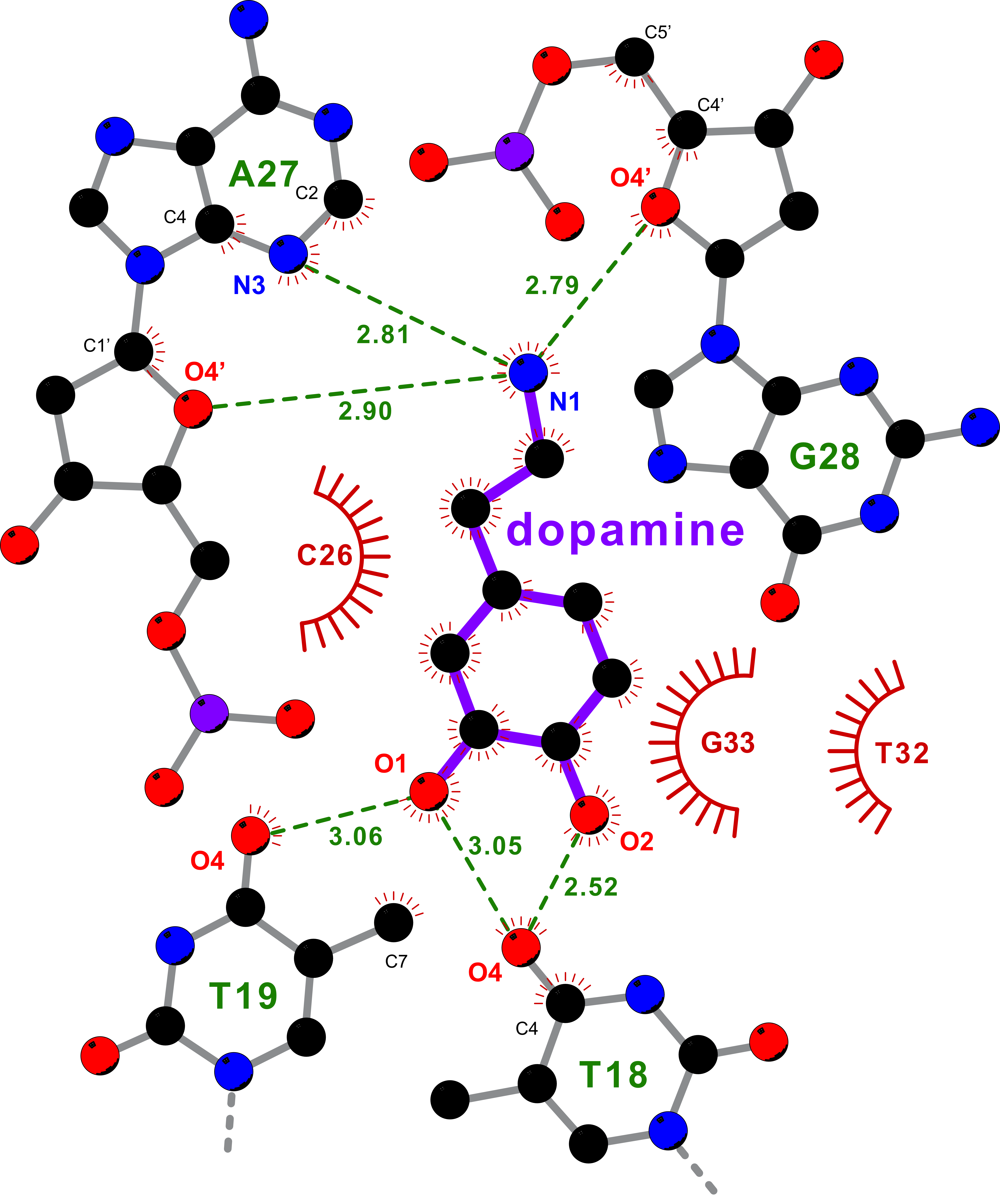
Binding through H-bonds, electrostatic and π interactions
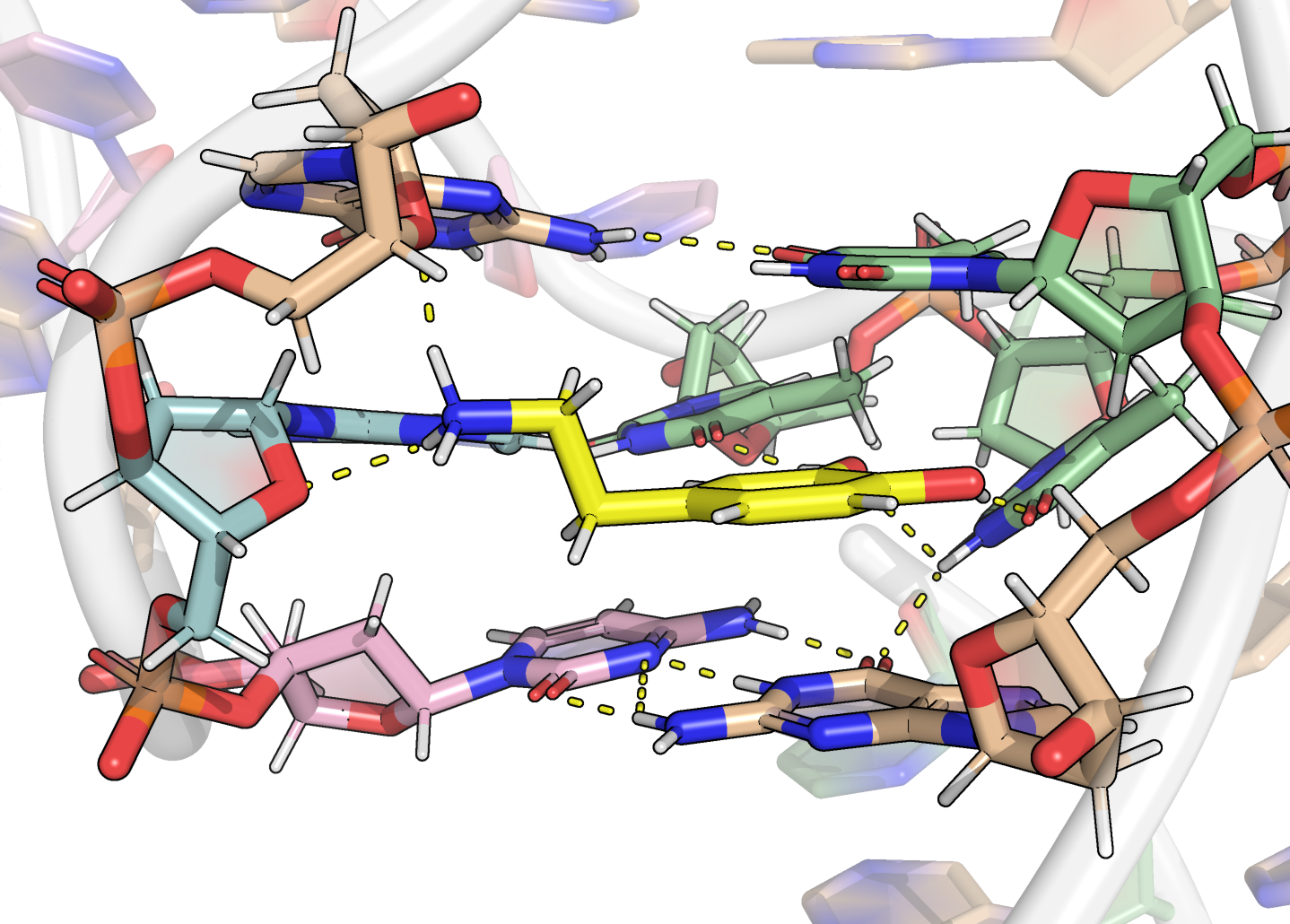
Dopamine binding site

2D projection in LigPlot+

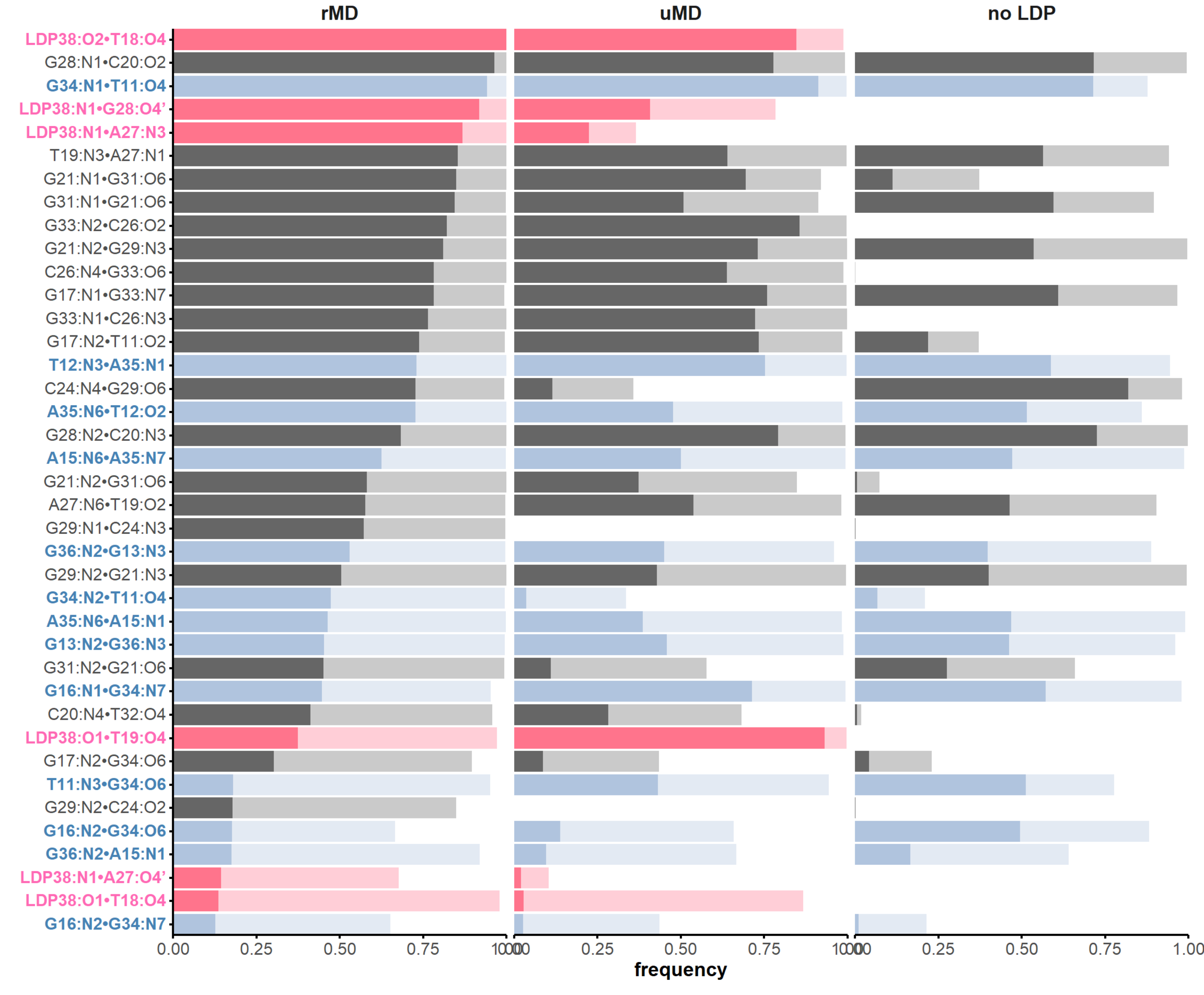
Restraints are necessary to refine the binding mode
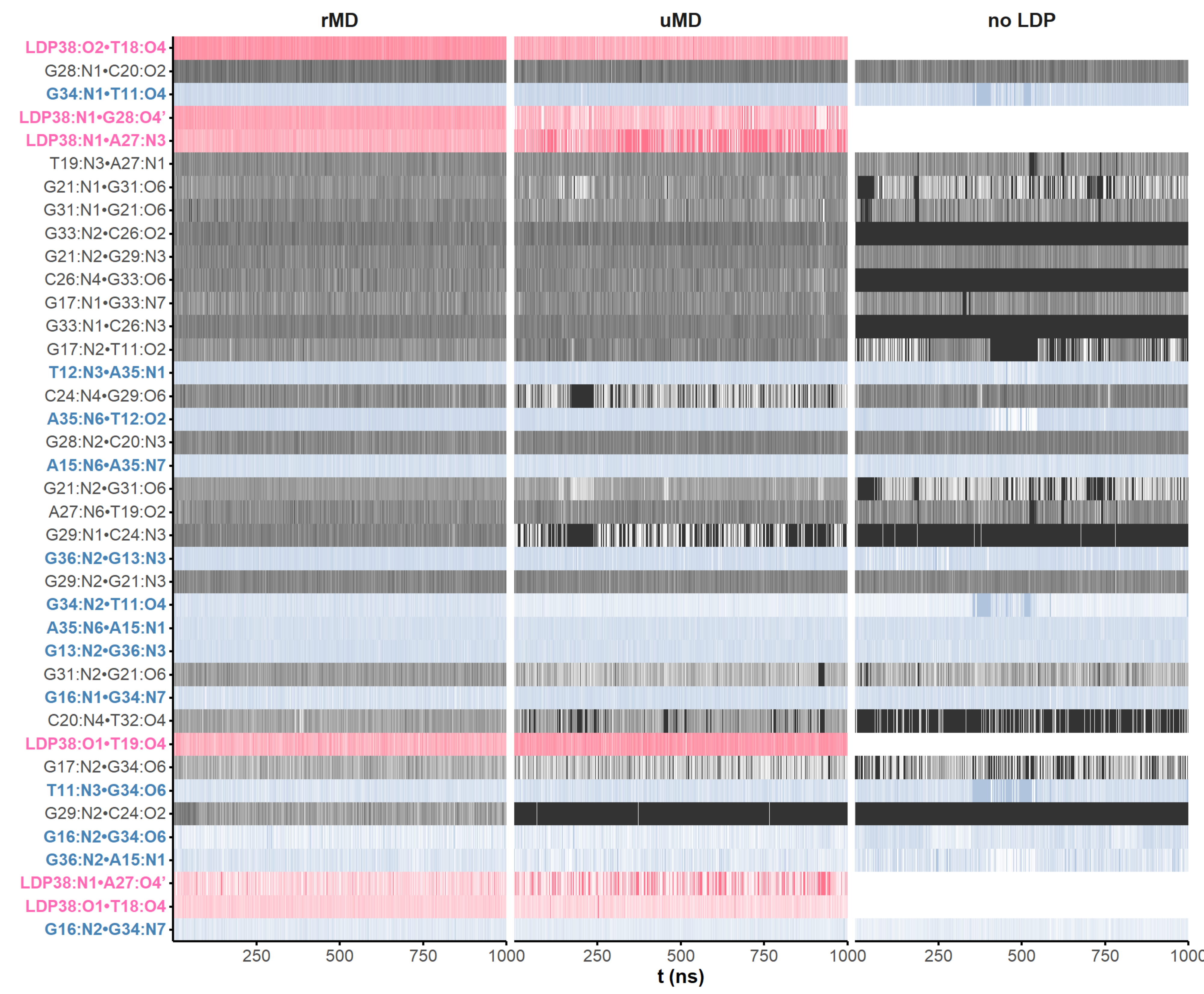
H-bonds inform structural dynamics
and model robustness
Prediction models still come short for aptamers

  • 0 out of 107 submitted models with \(RMSD < 10 Å\)
    • Training set is not diverse enough
    • Dopamine essential for folding

Summary

  • Robust MD simulations of the dopamine aptamer
    • Efficient preparation workflow + replication
    • GPU-enabled microsecond simulations ± NMR restraints

  • Robust MD simulations of the dopamine aptamer
    • Efficient preparation workflow + replication
    • GPU-enabled microsecond simulations ± NMR restraints
  • Semi-automated analysis of trajectories
    • C++ (cpptraj), R and Python scripts,DSSR (via API) and LigPlot+

  • Robust MD simulations of the dopamine aptamer
    • Efficient preparation workflow + replication
    • GPU-enabled microsecond simulations ± NMR restraints
  • Semi-automated analysis of trajectories
    • C++ (cpptraj), R and Python scripts,DSSR (via API) and LigPlot+
  • Numerous diagnostics and parameters
    • (pairwise) RMSD, H-bonds, dihedral angles

  • Robust MD simulations of the dopamine aptamer
    • Efficient preparation workflow + replication
    • GPU-enabled microsecond simulations ± NMR restraints
  • Semi-automated analysis of trajectories
    • C++ (cpptraj), R and Python scripts,DSSR (via API) and LigPlot+
  • Numerous diagnostics and parameters
    • (pairwise) RMSD, H-bonds, dihedral angles
  • Very non-canonical elements are necessary for folding/binding

  • Robust MD simulations of the dopamine aptamer
    • Efficient preparation workflow + replication
    • GPU-enabled microsecond simulations ± NMR restraints
  • Semi-automated analysis of trajectories
    • C++ (cpptraj), R and Python scripts,DSSR (via API) and LigPlot+
  • Numerous diagnostics and parameters
    • (pairwise) RMSD, H-bonds, dihedral angles
  • Very non-canonical elements are necessary for folding/binding
  • Prediction model have a long way to go for aptamers

Experimental data is necessary to solve aptamer structures

  • Robust MD simulations of the dopamine aptamer
    • Efficient preparation workflow + replication
    • GPU-enabled microsecond simulations ± NMR restraints
  • Semi-automated analysis of trajectories
    • C++ (cpptraj), R and Python scripts,DSSR (via API) and LigPlot+
  • Numerous diagnostics and parameters
    • (pairwise) RMSD, H-bonds, dihedral angles
  • Very non-canonical elements are necessary for folding/binding
  • Prediction model have a long way to go for aptamers

Acknowledgments

  • Canadian resources 🍁
    • Cameron Mackereth | Prism Team, ARNA, INSERM U1212, CNRS UMR 5320, U. Bordeaux
    • Philip E. Johnson | Department of Chemistry, York University, Toronto, ON, Canada
  • Computational resources 💻
    • DOREMI CALI v3 cluster of the Mésocentre de Calcul Intensif Aquitain (U. Bordeaux)

FIN